
As a supplier of POM Guide Rings, I often encounter inquiries from customers about various technical aspects of these products. One question that comes up quite frequently is: What is the coefficient of thermal expansion of POM Guide Rings? In this blog post, I will delve into this topic, providing you with a comprehensive understanding of the coefficient of thermal expansion of POM Guide Rings and its implications for their performance.
Understanding POM Guide Rings
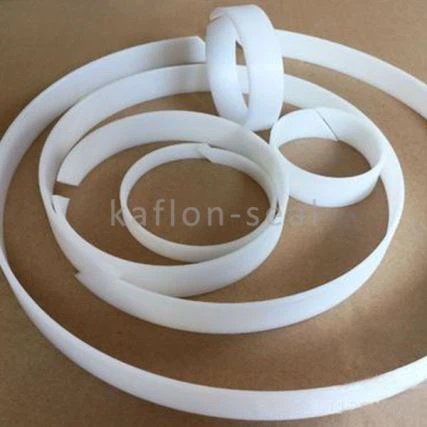
Before we dive into the coefficient of thermal expansion, let's first understand what POM Guide Rings are. POM, or Polyoxymethylene, is a high - performance engineering plastic known for its excellent mechanical properties, such as high stiffness, low friction, and good dimensional stability. POM Guide Rings are widely used in hydraulic and pneumatic systems to guide pistons and rods, ensuring smooth and precise movement. They play a crucial role in maintaining the alignment and stability of moving parts, thereby enhancing the overall performance and reliability of the system.
You can find more information about our POM Guide Rings on our website.
What is the Coefficient of Thermal Expansion?
The coefficient of thermal expansion (CTE) is a material property that describes how the size of a material changes with temperature. It is defined as the fractional change in length or volume of a material per degree change in temperature. Mathematically, the linear coefficient of thermal expansion (α) is given by the formula:
α = (ΔL / L₀) / ΔT
where ΔL is the change in length, L₀ is the original length, and ΔT is the change in temperature. The unit of CTE is typically expressed in per degree Celsius (°C⁻¹) or per degree Fahrenheit (°F⁻¹).
Coefficient of Thermal Expansion of POM Guide Rings
The coefficient of thermal expansion of POM Guide Rings is relatively low compared to many other plastics. The linear coefficient of thermal expansion for POM typically ranges from approximately 70 - 120 × 10⁻⁶ /°C. This relatively low CTE is one of the reasons why POM is a popular choice for guide rings in applications where dimensional stability is critical.
When the temperature of a POM Guide Ring changes, its dimensions will change according to its CTE. For example, if a POM Guide Ring is exposed to an increase in temperature, it will expand. Conversely, if the temperature decreases, it will contract. This change in dimensions can have significant implications for the performance of the guide ring and the overall system in which it is used.
Implications of the Coefficient of Thermal Expansion for POM Guide Rings
Dimensional Stability
The low CTE of POM Guide Rings ensures good dimensional stability over a wide range of temperatures. This is important because guide rings need to maintain their precise dimensions to function properly. If a guide ring expands or contracts too much due to temperature changes, it may not fit correctly in its housing, leading to issues such as increased friction, wear, and reduced system efficiency.
Compatibility with Other Materials
In many hydraulic and pneumatic systems, POM Guide Rings are used in conjunction with other materials, such as metals. The difference in the CTE between POM and these other materials can cause problems if not properly accounted for. For example, if a POM Guide Ring is installed in a metal housing and the temperature changes, the different rates of expansion or contraction can lead to stress and potential damage to the guide ring or the housing. Therefore, it is important to consider the CTE of all the materials in the system when designing and selecting components.
System Performance
The change in dimensions of POM Guide Rings due to temperature variations can also affect the performance of the overall system. For instance, if a guide ring expands and increases the clearance between the piston and the cylinder wall, it can lead to leakage of hydraulic fluid, reduced pressure, and decreased system efficiency. On the other hand, if the guide ring contracts and the clearance becomes too small, it can cause excessive friction, heat generation, and premature wear.
Comparing POM Guide Rings with Other Guide Ring Materials
In addition to POM Guide Rings, there are other types of guide rings available in the market, such as Phenolic Fabric Guide Rings. Phenolic fabric guide rings are made from a composite material that typically has a different coefficient of thermal expansion compared to POM.
Phenolic fabric guide rings generally have a higher CTE than POM Guide Rings. This means that they are more likely to experience significant dimensional changes with temperature variations. As a result, POM Guide Rings may be a better choice in applications where high - precision and dimensional stability are required over a wide temperature range.


Another alternative is the POM Hydraulic Wiper. While POM hydraulic wipers also use POM material, their function is different from guide rings. Wipers are designed to remove contaminants from the rod surface, while guide rings are mainly used for guiding and supporting the moving parts.
Controlling the Effects of Thermal Expansion
To minimize the negative effects of thermal expansion on POM Guide Rings, several strategies can be employed:
Material Selection
Choosing the right grade of POM with the appropriate CTE for the specific application is crucial. Some POM materials may have modified CTE values through the addition of fillers or other additives.
Design Considerations
Proper design of the system can help accommodate the thermal expansion of POM Guide Rings. This may include providing sufficient clearance between the guide ring and its housing, using flexible mounts, or incorporating expansion joints.
Temperature Control
Maintaining a stable operating temperature can also help reduce the impact of thermal expansion. This can be achieved through the use of cooling or heating systems, insulation, or by selecting an appropriate operating environment.
Conclusion
The coefficient of thermal expansion is an important property of POM Guide Rings that affects their dimensional stability, compatibility with other materials, and overall system performance. The relatively low CTE of POM makes it a popular choice for guide rings in applications where precision and reliability are essential. However, it is important to understand the implications of thermal expansion and take appropriate measures to control its effects.
If you are in the market for high - quality POM Guide Rings or have any questions about their technical specifications, including the coefficient of thermal expansion, please feel free to contact us. We are here to provide you with the best products and solutions for your specific needs.
References
- "Engineering Plastics Handbook", edited by John Murphy, published by Wiley - Interscience.
- Technical data sheets provided by POM material manufacturers.