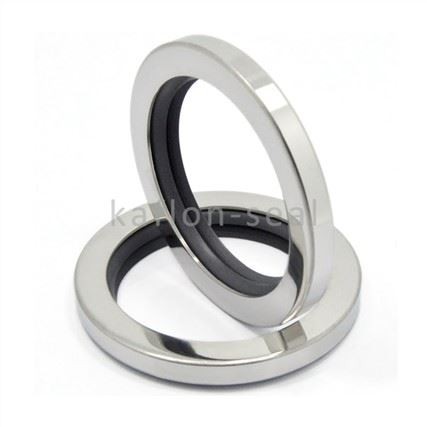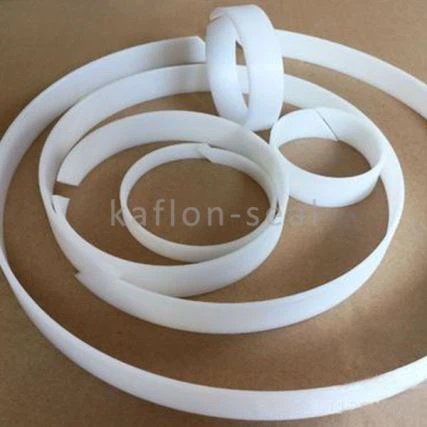

Hey there! As a supplier of PTFE Lip Seals, I often get asked about how these little wonders work. So, let's dive right in and break down the working principle of PTFE Lip Seals.
First off, what's PTFE? PTFE stands for Polytetrafluoroethylene. It's a synthetic fluoropolymer that's known for its amazing properties like low friction, high chemical resistance, and excellent temperature stability. These features make it a top - choice material for lip seals.
The basic idea behind a lip seal is to create a barrier. It's like a little guard that stops fluids (usually oil or grease) from leaking out and keeps contaminants, like dirt, dust, and water, from getting in. In the case of PTFE Lip Seals, they're designed to work in a variety of applications, from automotive engines to industrial machinery.
How PTFE Lip Seals Work
1. Sealing Contact
The most important part of a PTFE Lip Seal is the lip itself. The lip is the part that makes contact with the shaft or the surface it's supposed to seal against. When the seal is installed, the lip is pressed against the shaft with a certain amount of force. This force is called the radial force.
The PTFE material of the lip has a very low coefficient of friction. This means that even when it's in contact with the shaft, there's not a lot of resistance as the shaft rotates. So, it doesn't cause excessive wear on the shaft, and at the same time, it can maintain a good seal.


For example, in a Rotating Motions PTFE Shaft Seals, the lip continuously follows the surface of the rotating shaft. It conforms to any minor irregularities on the shaft surface, like small scratches or bumps. This ability to conform is crucial for maintaining a tight seal.
2. Fluid Film Formation
Another key aspect of the working principle is the formation of a fluid film between the lip and the shaft. When the shaft rotates, it drags a thin layer of the fluid (oil or grease) along with it. This fluid film acts as a lubricant between the lip and the shaft.
The PTFE material helps in maintaining this fluid film. It has a non - stick property, which means that the fluid can easily spread and form a continuous film. This film not only reduces friction but also helps in preventing leakage. If there's no proper fluid film, the lip can start to wear out quickly, and the seal will lose its effectiveness.
3. Pressure Differential
PTFE Lip Seals are designed to work under different pressure conditions. There's usually a pressure differential between the two sides of the seal. For instance, on one side, there might be high - pressure oil in a hydraulic system, and on the other side, there's atmospheric pressure.
The lip of the seal is shaped in such a way that it can withstand this pressure differential. It acts like a one - way valve. It allows the fluid to flow in a controlled manner but prevents it from leaking out. In a Radial PTFE Shaft Seal, the radial design of the lip helps in effectively handling the pressure differences across the seal.
Applications and Advantages
Applications
PTFE Lip Seals are used in a wide range of industries. In the automotive industry, they're used in engines, transmissions, and differentials. They help in keeping the lubricants in place and preventing contaminants from entering, which is essential for the smooth operation of these components.
In the industrial machinery sector, they're used in pumps, compressors, and motors. For example, in a pump, the PTFE Lip Seal prevents the pumped fluid from leaking out and also stops air from entering the system, which could cause cavitation.
In the aerospace industry, where reliability is of utmost importance, PTFE Lip Seals are used in various components. They can withstand the extreme temperature and pressure conditions that are common in aerospace applications.
Advantages
One of the biggest advantages of PTFE Lip Seals is their chemical resistance. PTFE can resist a wide range of chemicals, including acids, bases, and solvents. This makes them suitable for use in chemical processing plants and other environments where the seal might come into contact with corrosive substances.
They also have a long service life. Thanks to the low friction and wear - resistant properties of PTFE, the seals can last for a long time without needing frequent replacement. This reduces maintenance costs and downtime for the equipment.
Specialized PTFE Lip Seals
Vacuum Operation
There are also specialized PTFE Lip Seals for vacuum applications. Vacuum Operation PTFE Stainless Oil Seal is designed to work in environments where there's a vacuum on one side of the seal.
In a vacuum operation, the seal has to prevent air from leaking into the vacuum chamber. The PTFE material and the design of the lip are optimized to handle the unique challenges of vacuum conditions. The stainless - steel construction of these seals provides additional strength and durability.
Conclusion
So, there you have it - the working principle of PTFE Lip Seals. These seals are truly remarkable pieces of engineering. They use the unique properties of PTFE to create an effective sealing solution for a wide range of applications.
If you're in the market for high - quality PTFE Lip Seals, I'd love to have a chat with you. Whether you need seals for a small automotive project or a large - scale industrial application, we've got the expertise and the products to meet your needs. Reach out to us to start a discussion about your specific requirements and let's find the perfect PTFE Lip Seal for you.
References
- "Sealing Technology Handbook" by John H. Birk.
- "Advanced Materials for Sealing Applications" published by the Institute of Materials Science.