
Hey there! If you're in the market for high - quality PTFE materials, you've likely come across F200 PTFE Virgin. I'm a supplier of this amazing material, and I get a lot of questions about its performance, especially when it comes to high - pressure environments. So, let's dive right in and find out if F200 PTFE Virgin is resistant to high - pressure situations.
First off, let's understand what F200 PTFE Virgin is. PTFE, or polytetrafluoroethylene, is a well - known synthetic fluoropolymer. It's got some pretty awesome properties, like being extremely non - reactive, having a low coefficient of friction, and being super resistant to heat. The “virgin” part means that it's made from pure PTFE resin, not reprocessed or mixed with other materials. F200 PTFE Virgin is a specific grade of PTFE that offers some unique characteristics for different applications.
Now, let's talk about high - pressure environments. These can be found in a bunch of industries, such as automotive, aerospace, and manufacturing. In these settings, components need to withstand a lot of pressure without failing. For example, in hydraulic systems, seals and valves are constantly under high pressure, and if the material can't handle it, it can lead to leaks and system failures.
So, is F200 PTFE Virgin up for the challenge? The short answer is yes, but with some caveats.
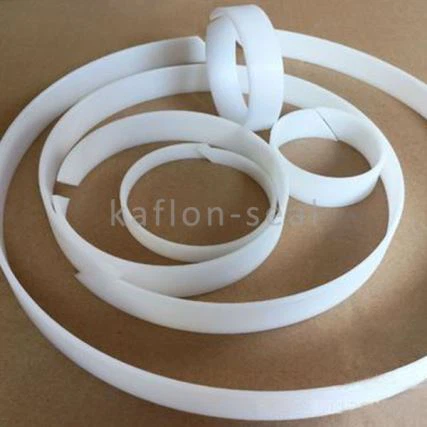
One of the main reasons F200 PTFE Virgin can handle high pressure is its high density. The dense molecular structure of this material gives it better mechanical strength compared to some other plastics. When pressure is applied, the tightly packed molecules can resist deformation better. This means that seals made from F200 PTFE Virgin are less likely to get squeezed out or lose their shape under high pressure, maintaining a good seal.
Another factor is its exceptional chemical stability. In high - pressure environments, there are often harsh chemicals involved. F200 PTFE Virgin won't react with most of these chemicals, which means it can keep its integrity and performance in corrosive conditions. This is a huge advantage, as corrosion can weaken materials and make them more prone to failure under pressure.
However, it's not all smooth sailing. While F200 PTFE Virgin is pressure - resistant, it does have its limits. Under extremely high pressures and certain temperature conditions, it can start to creep. Creep is when a material slowly deforms over time under a constant load. This can be a problem for applications where precise dimensions and long - term stability are crucial.


To mitigate the issue of creep, some engineers might use additives or reinforcement techniques. But the pure F200 PTFE Virgin does have inherent creep properties that need to be considered when designing for high - pressure applications.
Let's take a look at some real - world applications where F200 PTFE Virgin is used in high - pressure situations.
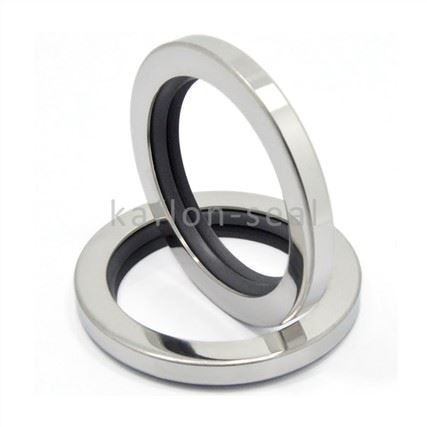
In the aerospace industry, it's used for making seals in hydraulic systems. These systems operate under high pressure and need reliable materials to ensure safety. F200 PTFE Virgin's resistance to pressure and chemicals makes it a great choice for these critical components. You can also check out Encapsulated Oring With PTFE Jacket Seal, which is another product that often utilizes PTFE materials in high - pressure sealing applications.
In automotive manufacturing, F200 PTFE Virgin can be found in fuel injection systems. The high - pressure environment in these systems requires a material that can withstand the pressure and also resist the chemicals in the fuel. F200 PTFE Virgin fits the bill nicely. And Static Sealing Encapsulated FKM ORING is another product that provides reliable sealing solutions in high - pressure automotive settings.
When it comes to long - term performance in high - pressure environments, regular maintenance and monitoring are essential. Even though F200 PTFE Virgin is a tough material, things like temperature fluctuations and cyclic loading can affect its performance over time. Systems should be inspected regularly to check for signs of wear or creep.
If you're looking for an alternative or complementary material, you might want to consider F280 Rulon. It has its own set of unique properties that can be beneficial in high - pressure applications, and in some cases, it can be used in combination with F200 PTFE Virgin for even better results.
Overall, F200 PTFE Virgin is a solid choice for many high - pressure applications. It offers a good balance of pressure resistance, chemical stability, and low friction. But it's important to understand its limitations and work with a knowledgeable supplier (like me!) who can help you make the right choices for your specific needs.
If you're interested in purchasing F200 PTFE Virgin or have any questions about its suitability for your high - pressure application, don't hesitate to reach out. I'm here to help you make the best decision and ensure that you get the highest - quality product for your requirements. Whether it's seals, gaskets, or other components, we can work together to find the perfect solution for your project.
References
- "Handbook of PTFE Technology" - Covers the general properties and applications of PTFE materials.
- Industry - specific technical papers on high - pressure systems and materials used in them.