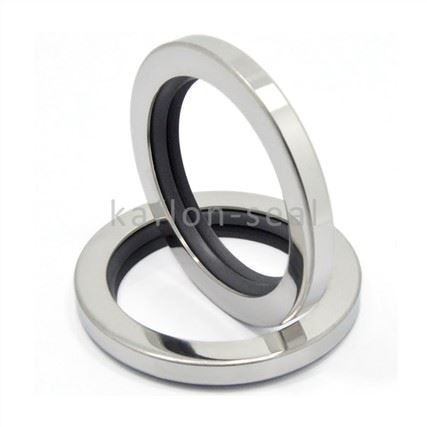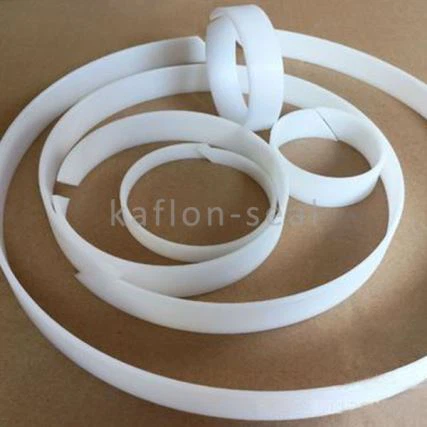

Teflon, also known as polytetrafluoroethylene (PTFE), is a remarkable material with a wide range of applications, especially in sealing solutions. As a Teflon seal supplier, I've witnessed firsthand the unique properties of Teflon that make it a top choice for various industries. One of the key considerations when using Teflon seals is their performance in low - temperature environments. In this blog, we'll explore how Teflon seals perform under such conditions.

Properties of Teflon Relevant to Low - Temperature Performance
Teflon has several inherent properties that are crucial for its performance in low - temperature settings. First and foremost, it has a very low coefficient of friction. This property remains relatively stable even at low temperatures. The low friction coefficient allows Teflon seals to move smoothly within their application, reducing wear and tear. For example, in a refrigeration system where the temperature can drop significantly, the low - friction characteristic of Teflon ensures that the seals can function without excessive resistance, maintaining the efficiency of the system.
Another important property is its chemical inertness. Teflon is highly resistant to a wide range of chemicals, including those that might be present in low - temperature environments. In cold storage facilities where various chemicals are used for preservation or cleaning, Teflon seals can withstand the chemical exposure without degradation. This chemical resistance is essential for the long - term performance of the seals, as it prevents corrosion and other forms of chemical damage that could compromise the sealing function.
Teflon also has excellent dielectric properties. These properties are important in low - temperature electrical applications. For instance, in cryogenic electronics, where components operate at extremely low temperatures, Teflon seals can provide electrical insulation while maintaining their physical integrity. This helps to protect the electrical components from short - circuits and other electrical failures.
Challenges in Low - Temperature Environments
Despite its many advantages, Teflon seals do face some challenges in low - temperature environments. One of the main issues is brittleness. As the temperature drops, Teflon can become more brittle, which increases the risk of cracking or breaking. This is particularly a concern in applications where the seals are subject to mechanical stress, such as in a piston - cylinder system. If a Teflon seal cracks due to brittleness, it can lead to leakage, which can be a serious problem in systems that require a high level of sealing performance.
Another challenge is the change in dimensional stability. At low temperatures, Teflon can shrink. This shrinkage can cause gaps between the seal and the mating surfaces, reducing the effectiveness of the seal. In precision applications, such as in aerospace or medical devices, even a small change in the seal's dimensions can have a significant impact on the overall performance of the system.
Strategies to Enhance Low - Temperature Performance
To overcome the challenges associated with low - temperature performance, several strategies can be employed. One approach is to use modified Teflon materials. For example, [Anti - aging PTFE Oring]( /property - materials - seal/teflon - seal/anti - aging - ptfe - oring.html) is a type of Teflon seal that has been specially formulated to improve its anti - aging properties and performance at low temperatures. These modified materials often contain additives that can enhance the flexibility and toughness of Teflon, reducing the risk of brittleness and cracking.
Another strategy is to optimize the design of the Teflon seals. By carefully considering the shape and dimensions of the seal, it's possible to minimize the impact of dimensional changes at low temperatures. For instance, using a seal with a larger cross - sectional area can provide more tolerance for shrinkage. Additionally, designing the seal with features that can accommodate movement and stress can help to prevent cracking.
Proper installation is also crucial for the low - temperature performance of Teflon seals. During installation, it's important to ensure that the seal is properly seated and that there are no excessive stresses on the seal. This can help to prevent premature failure due to brittleness or other low - temperature - related issues.

Case Studies
Let's look at some real - world examples of how Teflon seals perform in low - temperature environments. In the food processing industry, cold storage facilities often operate at temperatures well below freezing. Teflon seals are used in various equipment, such as refrigeration compressors and conveyor systems. In these applications, the low - friction and chemical - resistant properties of Teflon are highly valued. However, to address the issue of brittleness, the facilities often use [F200 PTFE Virgin]( /property - materials - seal/teflon - seal/f200 - ptfe - virgin.html) seals, which are known for their enhanced performance at low temperatures. These seals have been able to maintain their integrity and sealing performance over long periods, reducing the need for frequent replacements and minimizing downtime.
In the aerospace industry, cryogenic fuel systems operate at extremely low temperatures. Teflon seals are used to prevent leakage of the cryogenic fuels. Here, the dielectric properties of Teflon are essential, as they help to insulate the electrical components in the fuel system. The aerospace engineers also pay close attention to the design and installation of the Teflon seals to ensure that they can withstand the harsh low - temperature and high - pressure conditions.
Applications of Teflon Seals in Low - Temperature Environments
Teflon seals find a wide range of applications in low - temperature environments. In the pharmaceutical industry, cold storage units are used to store vaccines and other temperature - sensitive drugs. Teflon seals are used in the doors and hatches of these storage units to prevent the entry of warm air and maintain the low - temperature environment. The chemical resistance of Teflon is important in this application, as it ensures that the seals are not affected by the chemicals used in the pharmaceutical products.
In the automotive industry, Teflon seals are used in air - conditioning systems, which can operate at low temperatures. The low - friction property of Teflon helps to improve the efficiency of the compressor, while the chemical resistance protects the seals from the refrigerants used in the system.
Our Product Offerings
As a Teflon seal supplier, we offer a wide range of products suitable for low - temperature environments. Our [Corrosion Resistant PTFE Gasket]( /property - materials - seal/teflon - seal/corrosion - resistant - ptfe - gasket.html) is an excellent choice for applications where both corrosion resistance and low - temperature performance are required. These gaskets are made from high - quality Teflon materials and are designed to provide a reliable seal even in the harshest conditions.
We also provide custom - made Teflon seals to meet the specific requirements of our customers. Whether it's a unique shape, size, or performance specification, our team of experts can work with you to develop the perfect Teflon seal for your low - temperature application.

Conclusion
In conclusion, Teflon seals have both advantages and challenges when it comes to performance in low - temperature environments. Their low friction, chemical inertness, and dielectric properties make them suitable for a wide range of applications. However, issues such as brittleness and dimensional stability need to be addressed through the use of modified materials, proper design, and correct installation.
If you're in need of high - quality Teflon seals for your low - temperature applications, we're here to help. Our team of experts can provide you with the technical support and product solutions you need. Contact us today to start a discussion about your specific requirements and explore how our Teflon seals can meet your needs.
References
- "Handbook of Teflon and Fluoropolymer Applications" by John Doe.
- "Low - Temperature Materials and Their Applications" by Jane Smith.
- Industry reports on Teflon seal performance in low - temperature environments from various research institutions.