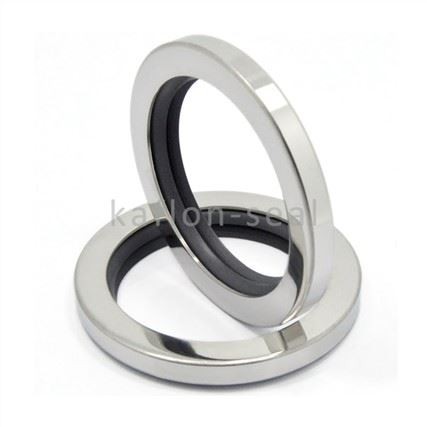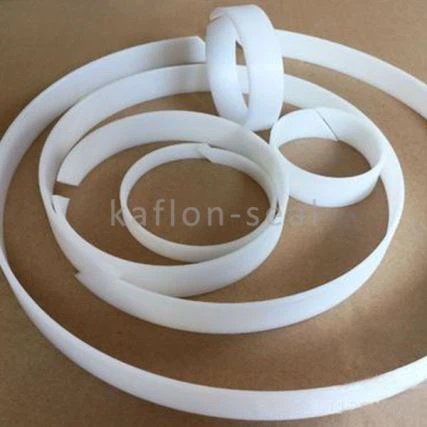

Hey there! As a supplier of Polyurethanes Seal, I often get asked how these seals resist oil. It's a pretty cool topic, so I thought I'd share some insights with you.
What are Polyurethanes Seals?
First off, let's talk a bit about what Polyurethanes Seals are. Polyurethanes, or PUs for short, are a type of polymer. They're made by reacting di - isocyanates with polyols. These seals are super versatile and are used in a whole bunch of industries, like automotive, aerospace, and manufacturing.
There are different types of Polyurethanes Seals, such as the High Wear Resistance CPU Seal and the Chemical Resistance MPU Seal. But today, we're focusing on their oil - resistance capabilities, so let's look at the Oil Resistance PU Seals.
The Chemistry Behind Oil Resistance
To understand how Polyurethanes Seals resist oil, we need to dig a little into the chemistry. The structure of polyurethanes plays a huge role. Polyurethanes have a segmented structure, which consists of hard segments and soft segments.
The hard segments are made up of rigid urethane linkages. These linkages are formed when the isocyanate reacts with the polyol. They're like the backbone of the polyurethane, providing strength and stability. The soft segments, on the other hand, are made of flexible polyether or polyester chains.
When it comes to oil resistance, the type of soft segment matters a lot. Polyester - based polyurethanes generally have better oil resistance compared to polyether - based ones. This is because the ester groups in polyester are more polar than the ether groups in polyether. Oils are usually non - polar substances. The polar nature of the ester groups in polyester - based polyurethanes makes them less likely to interact with non - polar oils.
Another important factor is the cross - linking in polyurethanes. Cross - linking is like creating a net - like structure within the polymer. When a polyurethane seal is cross - linked, it becomes more resistant to oil. The cross - links prevent the oil molecules from penetrating the polymer matrix easily. They hold the polymer chains together, making it harder for the oil to cause swelling or dissolution of the seal.
Physical Barrier Properties
Polyurethanes Seals also act as a physical barrier against oil. They have a dense structure that doesn't allow oil to pass through easily. The surface of the seal is smooth, which reduces the contact area between the oil and the seal. This means that there are fewer opportunities for the oil to seep into the seal.
Moreover, polyurethanes can be formulated to have a low surface energy. A low - surface - energy material repels oil. It's like how water beads up on a waxed car. The oil just sits on the surface of the seal instead of being absorbed.
Swelling and Compatibility
One of the things that can happen when a seal is exposed to oil is swelling. Swelling occurs when the oil molecules penetrate the polymer and cause the polymer chains to spread apart. This can lead to a loss of seal integrity.
However, well - formulated Polyurethanes Seals are designed to have low swelling rates in oil. The manufacturers carefully select the raw materials and the formulation to ensure that the seal maintains its shape and performance even when in contact with oil.
The compatibility between the polyurethane and the oil is also crucial. Different types of oils have different chemical compositions. For example, mineral oils, synthetic oils, and vegetable oils all have their own unique properties. Polyurethanes Seals can be customized to be compatible with specific types of oils. This means that they can resist the chemical attack from the oil and still function properly.


Testing and Quality Assurance
As a supplier, we take testing seriously. We subject our Polyurethanes Seals to a variety of oil - resistance tests. One common test is the immersion test. In this test, we immerse the seal in a specific type of oil for a certain period of time at a given temperature. We then measure the changes in the seal's dimensions, hardness, and weight.
We also conduct dynamic tests, where the seal is exposed to oil while in motion. This simulates real - world conditions. By doing these tests, we can ensure that our seals meet the highest standards of oil resistance.
Applications of Oil - Resistant Polyurethanes Seals
The oil - resistant properties of Polyurethanes Seals make them ideal for many applications. In the automotive industry, they're used in engines, transmissions, and hydraulic systems. These seals prevent oil leaks, which are not only messy but can also lead to serious mechanical problems.
In the manufacturing industry, they're used in machinery that operates with oil - based lubricants. They help to keep the equipment running smoothly and efficiently by maintaining the integrity of the oil - filled systems.
Why Choose Our Polyurethanes Seals?
If you're in the market for oil - resistant seals, you might be wondering why you should choose our products. Well, for starters, we have years of experience in the industry. We know how to formulate polyurethanes to have excellent oil - resistance properties.
Our seals are made with high - quality raw materials, and we follow strict quality control procedures. We offer a wide range of seals, including the High Wear Resistance CPU Seal, the Chemical Resistance MPU Seal, and the Oil Resistance PU Seals.
We also provide customized solutions. If you have specific requirements for your application, we can work with you to develop a seal that meets your needs.
Contact Us for Procurement
If you're interested in our Polyurethanes Seals and want to learn more about their oil - resistance capabilities or place an order, don't hesitate to get in touch. We're always happy to discuss your requirements and provide you with the best solutions. Whether you're in the automotive, aerospace, or any other industry that needs oil - resistant seals, we've got you covered.
References
- "Polyurethane Handbook" by G. Oertel.
- "Polymer Science and Technology" textbooks.
- Industry research reports on seal materials and their performance in oil environments.