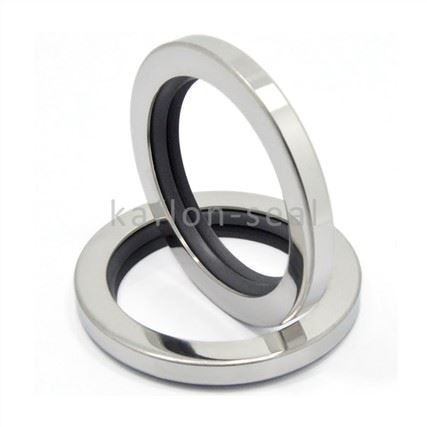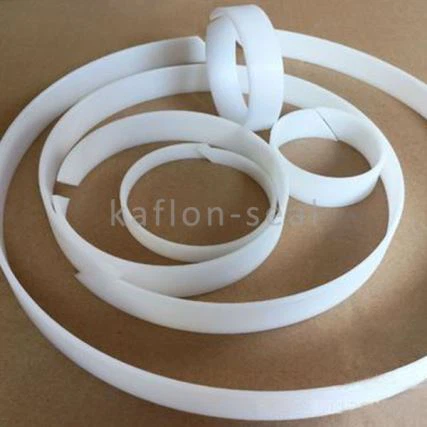

Flexural strength is a critical mechanical property that determines the ability of a material to resist deformation under bending loads. When it comes to Polyurethanes Seals, understanding their flexural strength is essential for various industrial applications. As a Polyurethanes Seal supplier, I am well - versed in the intricacies of this property and its significance in real - world scenarios.
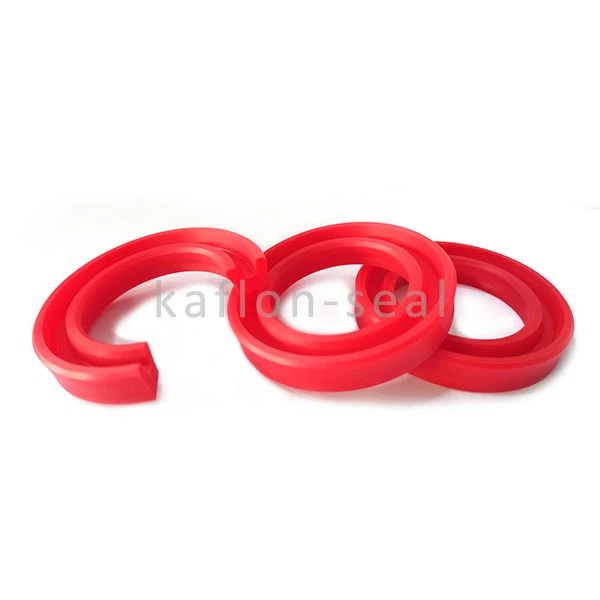

What is Flexural Strength?
Flexural strength, also known as bend strength, is the maximum stress a material can withstand before it fractures or permanently deforms when subjected to a bending force. It is typically measured using a three - point or four - point bending test. In a three - point bending test, a sample is placed on two supports, and a load is applied at the mid - point between the supports. The four - point bending test, on the other hand, distributes the load over a larger area of the sample.
The flexural strength of a material is expressed in units of stress, such as megapascals (MPa) or pounds per square inch (psi). It provides valuable information about the material's stiffness, ductility, and overall structural integrity. For Polyurethanes Seals, knowing the flexural strength helps in predicting how the seals will perform in applications where they are exposed to bending forces, such as in dynamic sealing systems.
Factors Affecting the Flexural Strength of Polyurethanes Seals
Chemical Composition
The chemical composition of polyurethanes plays a significant role in determining their flexural strength. Polyurethanes are made by reacting polyols with diisocyanates. Different types of polyols and isocyanates can be used, which results in a wide range of polyurethane formulations. For example, aromatic isocyanates generally provide higher flexural strength compared to aliphatic isocyanates. Additionally, the presence of additives such as chain extenders, cross - linkers, and fillers can also affect the flexural strength. Fillers like carbon black or silica can increase the stiffness and flexural strength of the polyurethane seal, but they may also reduce its ductility.
Density
The density of a polyurethane seal is another important factor. Generally, higher - density polyurethanes tend to have higher flexural strength. This is because a higher density implies a more compact molecular structure, which can better resist bending forces. However, increasing the density too much can make the seal more brittle, reducing its ability to absorb energy and increasing the risk of cracking.
Temperature
Temperature has a significant impact on the flexural strength of polyurethanes. At low temperatures, polyurethanes become stiffer and more brittle, which can lead to a decrease in flexural strength. On the other hand, at high temperatures, the material may soften, also reducing its ability to resist bending. The glass transition temperature (Tg) of the polyurethane is a critical parameter in this regard. Below the Tg, the polyurethane behaves like a glassy solid, while above the Tg, it becomes more rubbery.
Processing Conditions
The way the polyurethane seal is processed can also affect its flexural strength. Factors such as molding temperature, pressure, and curing time can influence the molecular structure and the distribution of additives within the seal. For example, improper curing can result in an uneven cross - linking density, leading to variations in flexural strength across the seal.
Importance of Flexural Strength in Polyurethanes Seal Applications
Automotive Industry
In the automotive industry, polyurethanes seals are used in various applications, such as door seals, window seals, and engine gaskets. These seals are often subjected to bending forces during installation and normal use. For example, when a car door is opened and closed, the door seal is bent repeatedly. A seal with high flexural strength can withstand these bending forces without cracking or deforming, ensuring a proper seal and preventing water, dust, and noise from entering the vehicle.
Aerospace Industry
In the aerospace industry, polyurethanes seals are used in critical applications where reliability is of utmost importance. Seals in aircraft engines, fuel systems, and hydraulic systems are exposed to extreme conditions, including high pressures and temperature variations. The flexural strength of these seals is crucial to ensure that they can maintain their integrity under these harsh conditions. A seal with inadequate flexural strength may fail, leading to leaks and potentially dangerous situations.
Industrial Machinery
In industrial machinery, polyurethanes seals are used in pumps, valves, and other equipment. These seals are often exposed to dynamic loads, including bending forces. For example, in a reciprocating pump, the seal may be bent as the piston moves back and forth. A seal with high flexural strength can withstand these dynamic loads, reducing the risk of leakage and extending the service life of the equipment.
Our Polyurethanes Seal Products and Their Flexural Strength
As a Polyurethanes Seal supplier, we offer a wide range of products with different flexural strengths to meet the diverse needs of our customers. Our Paraffin Oil Resistance TPU Seal is designed to have excellent resistance to paraffin oil while maintaining a good flexural strength. This makes it suitable for applications in the oil and gas industry, where seals are exposed to paraffin - rich environments and bending forces.
Our Blue Polyurethane seal is another popular product. It has been formulated to have a high flexural strength, making it ideal for applications where the seal needs to withstand significant bending forces. This seal is commonly used in automotive and industrial applications.
We also offer Polyurethane Filled With Solid Lubricants. The addition of solid lubricants not only reduces friction but also enhances the flexural strength of the seal. This product is suitable for applications where low friction and high flexural strength are required, such as in sliding seals.
Testing the Flexural Strength of Polyurethanes Seals
To ensure the quality and performance of our Polyurethanes Seals, we conduct rigorous testing of their flexural strength. We use standardized testing methods, such as ASTM D790 or ISO 178, to measure the flexural strength of our products. These tests involve preparing samples of the seal material and subjecting them to a bending load until failure. The results of these tests are used to verify that our seals meet the specified flexural strength requirements.
In addition to laboratory testing, we also perform real - world testing in simulated application environments. This allows us to evaluate the performance of our seals under actual operating conditions and make any necessary adjustments to the formulation or processing parameters.
Conclusion
The flexural strength of Polyurethanes Seals is a crucial property that determines their performance in various industrial applications. As a Polyurethanes Seal supplier, we understand the importance of this property and strive to provide our customers with high - quality seals that meet their specific requirements. Our wide range of products, including the Paraffin Oil Resistance TPU Seal, Blue Polyurethane seal, and Polyurethane Filled With Solid Lubricants, are designed to offer excellent flexural strength along with other desirable properties.
If you are in need of Polyurethanes Seals for your application, we invite you to contact us for a detailed discussion about your requirements. Our team of experts is ready to assist you in selecting the right product and providing you with the best solutions. We look forward to the opportunity to work with you and contribute to the success of your projects.
References
- ASTM International. (2017). ASTM D790 - 17: Standard Test Methods for Flexural Properties of Unreinforced and Reinforced Plastics and Electrical Insulating Materials.
- ISO. (2019). ISO 178:2019 Plastics — Determination of flexural properties.
- Oertel, G. (1993). Polyurethane Handbook. Hanser Publishers.