


 Popular Blog Posts



 Blog
BlogHey there! As a supplier of PTFE Guide Rings, I often get asked about the friction coefficients of these nifty little components. So, I thought I'd sit down and write a blog post to shed some light on this topic.
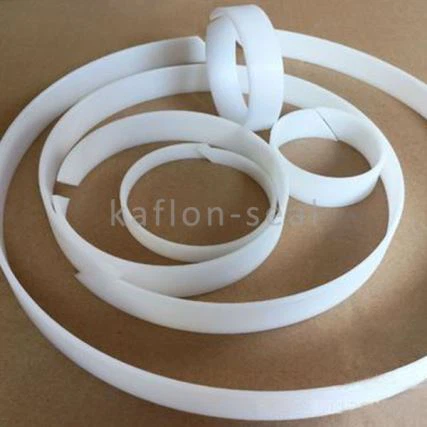
First off, let's talk a bit about what PTFE Guide Rings are. PTFE, or polytetrafluoroethylene, is a synthetic fluoropolymer that's known for its low friction, high chemical resistance, and excellent thermal stability. PTFE Guide Rings are used in a variety of applications, especially in hydraulic and pneumatic systems. They help guide pistons and rods, reducing wear and tear on the system and improving its overall performance. You can find more about PTFE Guide Rings on our website.
Now, let's dive into the friction coefficients. The friction coefficient is a measure of how much friction there is between two surfaces in contact. In the case of PTFE Guide Rings, we're usually interested in the friction between the ring and the piston or rod it's guiding, as well as the friction between the ring and the housing.


One of the key advantages of PTFE Guide Rings is their extremely low friction coefficient. On average, the static friction coefficient of PTFE against steel is around 0.04 - 0.05, and the dynamic friction coefficient is even lower, typically in the range of 0.02 - 0.04. This low friction is due to the unique molecular structure of PTFE. The fluorine atoms in the polymer chain create a smooth, non - stick surface that allows for easy sliding.
This low friction has several benefits. For starters, it reduces the amount of energy required to move the piston or rod. In a hydraulic system, for example, less energy means lower power consumption and potentially lower operating costs. It also helps to minimize wear on both the guide ring and the mating surfaces. Since there's less friction, there's less heat generated, which can extend the lifespan of the components.
However, it's important to note that the friction coefficient of PTFE Guide Rings can be affected by several factors. One of the main factors is the surface finish of the mating parts. A smoother surface finish on the piston or rod will generally result in a lower friction coefficient. If the surface is rough, it can increase the contact area between the PTFE and the metal, leading to higher friction.
The operating temperature also plays a role. PTFE has good thermal stability, but extreme temperatures can still have an impact on its friction properties. At very high temperatures, the PTFE may start to soften slightly, which could increase the friction. On the other hand, at very low temperatures, the material may become more brittle, which could also affect the friction characteristics.
Another factor is the load applied to the guide ring. Higher loads can increase the friction coefficient, as there's more force pressing the PTFE against the mating surface. However, PTFE Guide Rings are designed to handle a wide range of loads, and their low friction properties still hold up relatively well under normal operating conditions.
When compared to other types of guide rings, such as Phenolic Fabric Guide Rings, PTFE Guide Rings have a clear advantage in terms of friction. Phenolic fabric guide rings typically have a higher friction coefficient, which means they may require more energy to operate and may experience more wear over time.
In some applications, you might also come across POM Hydraulic Wiper. Polyoxymethylene (POM) is another material used in hydraulic components. While POM has good mechanical properties, its friction coefficient is generally higher than that of PTFE. This makes PTFE Guide Rings a better choice when low friction is a critical requirement.
So, if you're in the market for guide rings and you're looking for a solution with low friction, high durability, and excellent chemical resistance, PTFE Guide Rings are definitely worth considering. Our company has been supplying high - quality PTFE Guide Rings for years, and we have the expertise to help you choose the right product for your specific application.
Whether you're working on a small - scale project or a large industrial system, we can provide you with the right guide rings to meet your needs. We offer a wide range of sizes and configurations, and we can also customize the rings to fit your exact specifications.
If you're interested in learning more about our PTFE Guide Rings or have any questions about friction coefficients or other technical aspects, don't hesitate to reach out. We're always happy to have a chat and help you find the best solution for your project.
In conclusion, the low friction coefficient of PTFE Guide Rings makes them an ideal choice for many applications. Their unique properties offer significant advantages in terms of energy efficiency, wear resistance, and overall system performance. So, if you're looking for a reliable and high - performance guide ring, give PTFE a try.
References:
- "Handbook of Polytetrafluoroethylene (PTFE) and Related Fluoropolymers"
- "Hydraulic and Pneumatic Systems: Design and Application"