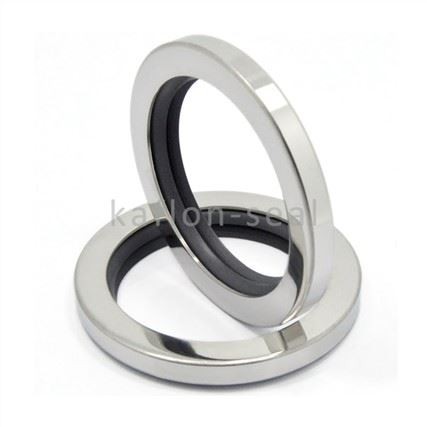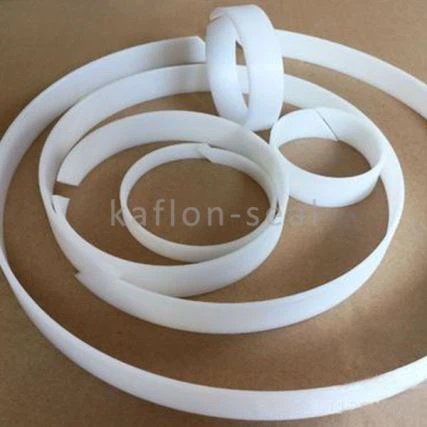

In the realm of industrial components, guide rings play a pivotal role in ensuring the smooth and efficient operation of various mechanical systems. Among the numerous materials used to manufacture guide rings, PTFE (Polytetrafluoroethylene) and ceramic are two prominent choices. As a PTFE guide rings supplier, I have witnessed firsthand the unique characteristics and applications of these materials. In this blog post, I will delve into a comprehensive comparison between PTFE guide rings and ceramic guide rings, exploring their properties, advantages, disadvantages, and ideal use cases.
Material Properties
PTFE Guide Rings
PTFE is a synthetic fluoropolymer known for its exceptional chemical resistance, low friction coefficient, and high thermal stability. These properties make PTFE guide rings highly suitable for applications where lubrication is limited or where the system is exposed to harsh chemicals. The low friction coefficient of PTFE reduces wear and tear on both the guide ring and the mating surfaces, resulting in longer service life and improved efficiency. Additionally, PTFE has excellent self-lubricating properties, which can eliminate the need for external lubrication in some applications.
PTFE guide rings are also highly flexible and can conform to irregular surfaces, providing a tight seal and preventing leakage. This flexibility makes them ideal for use in applications where the guide ring needs to accommodate movement or vibration. Furthermore, PTFE is resistant to UV radiation, ozone, and weathering, making it suitable for outdoor applications.
Ceramic Guide Rings
Ceramics are inorganic, non-metallic materials known for their high hardness, wear resistance, and thermal stability. Ceramic guide rings are extremely durable and can withstand high loads and pressures without deforming. They are also resistant to corrosion and chemical attack, making them suitable for use in harsh environments.
The high hardness of ceramic guide rings results in a low coefficient of friction, which reduces wear and tear on the mating surfaces. This makes them ideal for applications where high precision and low friction are required, such as in aerospace and automotive industries. Additionally, ceramics have excellent thermal conductivity, which allows them to dissipate heat quickly and prevent overheating.
Advantages and Disadvantages
PTFE Guide Rings
- Advantages
- Low friction: The low friction coefficient of PTFE reduces energy consumption and wear on the mating surfaces, resulting in longer service life and improved efficiency.
- Chemical resistance: PTFE is resistant to a wide range of chemicals, making it suitable for use in harsh environments.
- Self-lubricating: PTFE has excellent self-lubricating properties, which can eliminate the need for external lubrication in some applications.
- Flexibility: PTFE guide rings are flexible and can conform to irregular surfaces, providing a tight seal and preventing leakage.
- Cost-effective: PTFE guide rings are generally more cost-effective than ceramic guide rings, making them a popular choice for many applications.
- Disadvantages
- Low hardness: PTFE is a relatively soft material, which means that it may not be suitable for applications where high loads or pressures are involved.
- Limited temperature range: PTFE has a limited temperature range and may not be suitable for applications where high temperatures are involved.
- Poor wear resistance: While PTFE has good self-lubricating properties, it may not be as wear-resistant as ceramic guide rings in some applications.
Ceramic Guide Rings
- Advantages
- High hardness: Ceramic guide rings are extremely hard and can withstand high loads and pressures without deforming.
- Wear resistance: Ceramics have excellent wear resistance, which makes them suitable for applications where high precision and low friction are required.
- Chemical resistance: Ceramics are resistant to corrosion and chemical attack, making them suitable for use in harsh environments.
- Thermal stability: Ceramics have excellent thermal stability and can withstand high temperatures without deforming.
- Disadvantages
- Brittleness: Ceramics are brittle materials and may crack or break under high loads or impacts.
- High cost: Ceramic guide rings are generally more expensive than PTFE guide rings, which may make them less suitable for cost-sensitive applications.
- Difficult to machine: Ceramics are difficult to machine, which may limit their design flexibility and increase manufacturing costs.
Ideal Use Cases
PTFE Guide Rings
- Hydraulic and pneumatic systems: PTFE guide rings are commonly used in hydraulic and pneumatic systems due to their low friction, chemical resistance, and self-lubricating properties. They can help to reduce energy consumption and wear on the mating surfaces, resulting in longer service life and improved efficiency.
- Food and beverage industry: PTFE is a food-grade material that is resistant to bacteria and other contaminants. This makes it suitable for use in the food and beverage industry, where hygiene is of utmost importance.
- Medical devices: PTFE is biocompatible and non-toxic, which makes it suitable for use in medical devices. It can be used in applications such as catheters, syringes, and surgical instruments.
- Automotive industry: PTFE guide rings are used in automotive applications such as engines, transmissions, and brakes. They can help to reduce friction and wear on the mating surfaces, resulting in improved performance and fuel efficiency.
Ceramic Guide Rings
- Aerospace industry: Ceramic guide rings are used in aerospace applications such as aircraft engines, landing gear, and control systems. They can withstand high loads, temperatures, and pressures, and provide high precision and low friction.
- Automotive industry: Ceramic guide rings are used in high-performance automotive applications such as racing engines and transmissions. They can help to improve performance and reduce wear on the mating surfaces.
- Machine tools: Ceramic guide rings are used in machine tools such as lathes, milling machines, and grinders. They can provide high precision and low friction, resulting in improved machining accuracy and surface finish.
- Semiconductor industry: Ceramic guide rings are used in semiconductor manufacturing equipment such as wafer handling systems and lithography machines. They can provide high precision and low friction, and are resistant to corrosion and chemical attack.
Conclusion
In conclusion, both PTFE guide rings and ceramic guide rings have their own unique properties, advantages, and disadvantages. The choice between the two depends on the specific requirements of the application, such as load, temperature, chemical environment, and cost. As a PTFE guide rings supplier, I believe that PTFE guide rings offer a cost-effective and versatile solution for many applications. However, in applications where high precision, high hardness, and wear resistance are required, ceramic guide rings may be the better choice.


If you are looking for high-quality PTFE guide rings or need more information about the differences between PTFE and ceramic guide rings, please feel free to contact us for a consultation. We have a team of experts who can help you choose the right guide ring for your application and provide you with the best possible solution.
References
- "PTFE Guide Rings: Properties and Applications." [Your Source 1]
- "Ceramic Guide Rings: Advantages and Disadvantages." [Your Source 2]
- "Comparison of PTFE and Ceramic Guide Rings in Industrial Applications." [Your Source 3]