


 Popular Blog Posts


 Blog
BlogTeflon seals are widely used in various industries due to their excellent chemical resistance, low friction coefficient, and high-temperature stability. As a Teflon seal supplier, I often get asked about the typical tolerance for Teflon seal dimensions. In this blog post, I'll share some insights on this topic based on my experience in the industry.
Understanding Tolerance in Teflon Seals
Tolerance refers to the allowable variation in the dimensions of a part. In the case of Teflon seals, it's crucial because even a small deviation can affect the seal's performance. For example, if a seal is too large, it may not fit properly into the housing, leading to leaks. On the other hand, if it's too small, it won't provide an effective seal, which can also result in leakage and potential damage to the equipment.
Factors Affecting Tolerance
Several factors can influence the typical tolerance for Teflon seal dimensions.
Material Properties
Teflon, or polytetrafluoroethylene (PTFE), has unique material properties. It has a relatively high coefficient of thermal expansion compared to some other materials. This means that temperature changes can cause the Teflon seal to expand or contract. When setting the tolerance, we need to consider the operating temperature range of the application. For instance, in high-temperature environments, the seal may expand, so the tolerance should be adjusted accordingly to ensure a proper fit even under thermal stress.
Manufacturing Process
The manufacturing process of Teflon seals also plays a significant role. Different manufacturing methods, such as molding, machining, or extrusion, can have varying levels of precision. Molding processes, for example, can produce seals with relatively consistent dimensions, but there may still be some minor variations due to factors like mold wear and the flow of the Teflon material during the molding process. Machining, on the other hand, can offer higher precision but is more time - consuming and expensive. As a supplier, we choose the manufacturing process based on the required tolerance and the volume of production.
Application Requirements
The specific application of the Teflon seal is perhaps the most important factor. In some applications, such as in high - pressure hydraulic systems, a very tight tolerance is required to prevent fluid leakage. Even a small gap can lead to a significant loss of pressure and reduced system efficiency. In other applications, like in low - pressure or non - critical sealing applications, a looser tolerance may be acceptable.
Typical Tolerance Ranges
The typical tolerance for Teflon seal dimensions can vary widely depending on the factors mentioned above. However, I can give you some general guidelines.
Diameter Tolerance
For small - diameter Teflon seals (less than 50 mm), the diameter tolerance is usually in the range of ±0.05 mm to ±0.1 mm. This relatively tight tolerance is necessary to ensure a proper fit in small - scale applications where even a small deviation can have a significant impact.
For medium - diameter seals (50 mm to 200 mm), the diameter tolerance may range from ±0.1 mm to ±0.2 mm. As the diameter increases, it becomes more challenging to achieve extremely tight tolerances, but we still need to maintain a reasonable level of accuracy to ensure proper sealing.
For large - diameter Teflon seals (greater than 200 mm), the diameter tolerance can be in the range of ±0.2 mm to ±0.5 mm. Larger seals are more prone to dimensional variations during the manufacturing process, and the application may also be more forgiving in terms of tolerance.
Thickness Tolerance
The thickness tolerance of Teflon seals also depends on the size and application. For thin Teflon seals (less than 2 mm thick), the thickness tolerance is typically ±0.02 mm to ±0.05 mm. This tight tolerance is important to ensure consistent sealing performance, especially in applications where the seal needs to maintain a specific compression ratio.
For medium - thickness seals (2 mm to 5 mm), the thickness tolerance may range from ±0.05 mm to ±0.1 mm. And for thick Teflon seals (greater than 5 mm), the thickness tolerance can be in the range of ±0.1 mm to ±0.2 mm.
Specialized Teflon Seals and Their Tolerances
We offer a variety of specialized Teflon seals, each with its own unique tolerance requirements.

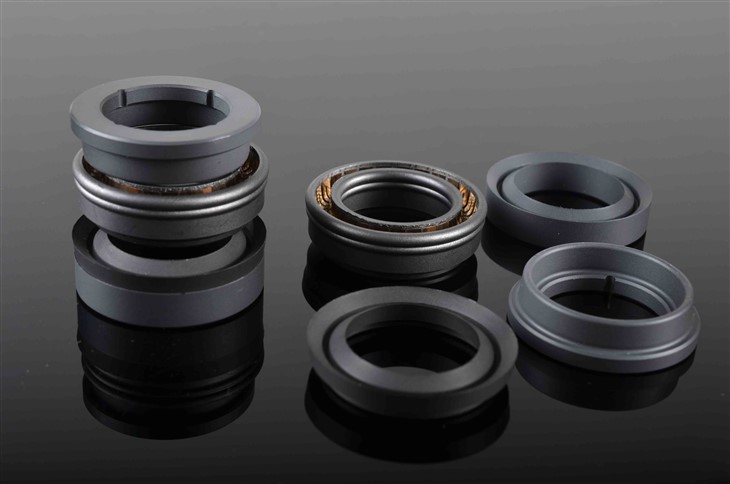
F200 PTFE Virgin
The F200 PTFE Virgin is a high - quality Teflon material that is often used in applications where purity and chemical resistance are crucial. Due to its high - end nature and the critical applications it serves, the tolerance for F200 PTFE Virgin seals is usually on the tighter side. For diameter, it can be around ±0.05 mm for small - sized seals, and for thickness, it may be ±0.02 mm for thin seals.
Glass Fiber Filled Lip Seal
The Glass Fiber Filled Lip Seal is designed to have enhanced mechanical properties. The addition of glass fibers can improve the seal's strength and wear resistance. However, the presence of glass fibers can also make the manufacturing process a bit more complex, which may affect the tolerance. Generally, the diameter tolerance for these seals is similar to that of regular Teflon seals, but the thickness tolerance may be slightly looser, around ±0.05 mm for thin seals, due to the potential for uneven distribution of the glass fibers.
Corrosion Resistant PTFE Gasket
The Corrosion Resistant PTFE Gasket is commonly used in applications where protection against corrosive substances is required. These gaskets often need to fit precisely to prevent the ingress of corrosive fluids. The diameter tolerance for corrosion - resistant PTFE gaskets is typically in the range of ±0.1 mm to ±0.2 mm, and the thickness tolerance is around ±0.05 mm to ±0.1 mm, depending on the size of the gasket.
Ensuring Quality and Meeting Tolerances
As a Teflon seal supplier, we have a strict quality control system in place to ensure that our seals meet the required tolerances. We use advanced measuring equipment, such as coordinate measuring machines (CMMs), to accurately measure the dimensions of the seals during the manufacturing process. This allows us to detect any deviations early and make the necessary adjustments.
We also have a team of experienced engineers who are constantly monitoring the manufacturing process to ensure that the Teflon material is processed correctly. They can make adjustments to the manufacturing parameters, such as temperature, pressure, and speed, to minimize dimensional variations.
Contact Us for Your Teflon Seal Needs
If you're in the market for high - quality Teflon seals with precise tolerances, we're here to help. Whether you need a standard Teflon seal or a specialized one like the F200 PTFE Virgin, Glass Fiber Filled Lip Seal, or Corrosion Resistant PTFE Gasket, we can provide you with the right solution. Our team of experts can work with you to understand your specific requirements and ensure that the seals we supply meet your exact needs. Don't hesitate to contact us to start the procurement process and discuss your project in detail.
References
- "Handbook of PTFE Technology" - This book provides in - depth information on the properties and manufacturing of PTFE materials, which is relevant to understanding Teflon seal tolerances.
- Industry standards and guidelines related to sealing applications, such as those from the American Society of Mechanical Engineers (ASME) and the International Organization for Standardization (ISO). These standards often provide general guidelines on dimensional tolerances for seals.