


 Popular Blog Posts



 Blog
BlogWhat is the modulus of elasticity of Ptfe Guide Rings?
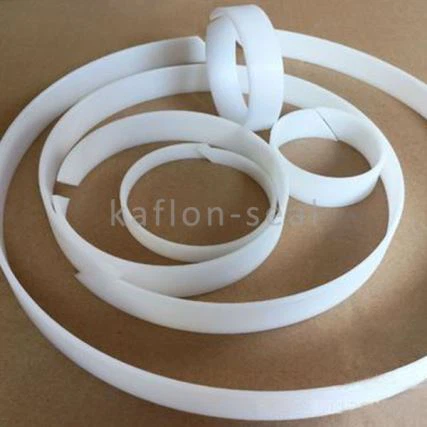
As a seasoned supplier of PTFE guide rings, I often encounter inquiries about the modulus of elasticity of these essential components. Understanding the modulus of elasticity of PTFE guide rings is crucial for engineers, designers, and anyone involved in the selection and application of these products. In this blog post, I will delve into the concept of the modulus of elasticity, its significance for PTFE guide rings, and how it impacts their performance in various applications.
Understanding the Modulus of Elasticity
The modulus of elasticity, also known as Young's modulus, is a fundamental mechanical property that measures the stiffness of a material. It is defined as the ratio of stress (force per unit area) to strain (deformation per unit length) within the elastic range of a material. In simpler terms, it indicates how much a material will deform under a given load before it reaches its elastic limit and begins to experience permanent deformation.
Mathematically, the modulus of elasticity (E) is expressed as:
[E=\frac{\sigma}{\epsilon}]
where (\sigma) is the stress applied to the material and (\epsilon) is the resulting strain. The modulus of elasticity is typically measured in units of pressure, such as pascals (Pa) or megapascals (MPa).
Modulus of Elasticity of PTFE
Polytetrafluoroethylene (PTFE), commonly known as Teflon, is a synthetic fluoropolymer with a wide range of applications due to its excellent chemical resistance, low friction coefficient, and high temperature stability. The modulus of elasticity of PTFE can vary depending on several factors, including its molecular weight, processing conditions, and the presence of fillers or additives.
Typically, the modulus of elasticity of unfilled PTFE ranges from approximately 400 to 700 MPa. This relatively low modulus of elasticity compared to other engineering plastics makes PTFE a flexible and compliant material. However, it also means that PTFE guide rings can deform more easily under load, which may be a consideration in applications where dimensional stability is critical.
Significance for PTFE Guide Rings
The modulus of elasticity of PTFE guide rings plays a crucial role in their performance in various applications. Here are some key aspects where the modulus of elasticity is significant:


- Load Bearing Capacity: The modulus of elasticity determines how much load a PTFE guide ring can withstand without excessive deformation. A higher modulus of elasticity indicates a stiffer material that can support greater loads without significant deflection. In applications where the guide ring is subjected to high radial or axial loads, a PTFE guide ring with a higher modulus of elasticity may be preferred to ensure proper functioning and prevent premature failure.
- Dimensional Stability: PTFE guide rings are often used in applications where precise dimensional control is required. The modulus of elasticity affects the dimensional stability of the guide ring under load. A lower modulus of elasticity can result in greater deformation, which may lead to changes in the ring's dimensions and potentially affect its fit and performance. In applications where tight tolerances are necessary, a PTFE guide ring with a higher modulus of elasticity may be selected to maintain dimensional stability.
- Sealing Performance: PTFE guide rings are sometimes used in conjunction with seals to provide support and prevent extrusion. The modulus of elasticity can influence the sealing performance of the guide ring. A stiffer guide ring with a higher modulus of elasticity can better resist extrusion and maintain a proper seal, especially in high-pressure applications.
- Friction and Wear: The modulus of elasticity can also affect the friction and wear characteristics of PTFE guide rings. A more flexible guide ring with a lower modulus of elasticity may conform better to the mating surfaces, resulting in lower friction. However, it may also be more prone to wear due to its increased flexibility. On the other hand, a stiffer guide ring with a higher modulus of elasticity may have higher friction but better wear resistance.
Factors Affecting the Modulus of Elasticity of PTFE Guide Rings
Several factors can influence the modulus of elasticity of PTFE guide rings. Here are some of the key factors:
- Fillers and Additives: The addition of fillers or additives to PTFE can significantly affect its modulus of elasticity. For example, the incorporation of glass fibers, carbon fibers, or bronze powder can increase the stiffness of PTFE and raise its modulus of elasticity. These filled PTFE guide rings are often used in applications where higher load-bearing capacity and dimensional stability are required.
- Processing Conditions: The processing conditions during the manufacturing of PTFE guide rings can also impact their modulus of elasticity. Factors such as sintering temperature, pressure, and cooling rate can affect the molecular structure and crystallinity of PTFE, which in turn can influence its mechanical properties, including the modulus of elasticity.
- Temperature: The modulus of elasticity of PTFE is temperature-dependent. As the temperature increases, the modulus of elasticity of PTFE generally decreases, making the material more flexible. This temperature dependence should be considered in applications where the guide ring will be exposed to varying temperatures.
Applications of PTFE Guide Rings
PTFE guide rings are widely used in a variety of industries and applications due to their unique properties. Some common applications include:
- Hydraulic and Pneumatic Systems: PTFE guide rings are used in hydraulic and pneumatic cylinders to provide support and guidance for the piston or rod. They help to reduce friction, prevent metal-to-metal contact, and improve the overall efficiency and reliability of the system. In these applications, the modulus of elasticity of the guide ring is important for ensuring proper load distribution and dimensional stability.
- Automotive Industry: PTFE guide rings are used in automotive applications such as engine seals, transmission systems, and braking systems. They offer excellent chemical resistance, low friction, and high temperature stability, making them suitable for use in harsh automotive environments. The modulus of elasticity of the guide ring can impact its performance in these applications, especially in terms of load bearing and sealing.
- Food and Beverage Industry: PTFE guide rings are used in food and beverage processing equipment due to their non-toxic and hygienic properties. They are often used in pumps, valves, and other components to provide support and guidance. The modulus of elasticity of the guide ring is important for ensuring proper functioning and preventing contamination in these applications.
Related Products
In addition to PTFE guide rings, we also offer a range of related products that may be of interest to you. These include Phenolic Cloth Hydraulic Wiper, Phenolic Fabric Guide Rings, and Wear-resistant Guide Ring. These products are designed to meet the specific needs of various industries and applications, and they offer excellent performance and reliability.
Contact Us for Procurement
If you are interested in learning more about PTFE guide rings or any of our other products, or if you have specific requirements for your application, please do not hesitate to contact us. Our team of experts is available to provide you with detailed information, technical support, and assistance in selecting the right products for your needs. We look forward to the opportunity to work with you and help you find the best solutions for your procurement requirements.
References
- "Engineering Properties of Polytetrafluoroethylene (PTFE)" - Plastics International
- "Mechanical Properties of PTFE and Its Composites" - Journal of Applied Polymer Science