


 Popular Blog Posts



 Blog
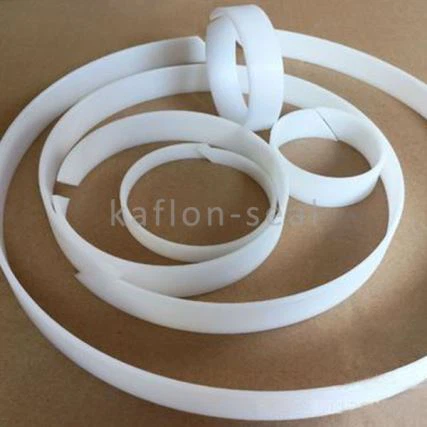
BlogPolytetrafluoroethylene (PTFE) guide rings are essential components in various industrial applications, particularly in hydraulic and pneumatic systems. Understanding the melting point of PTFE guide rings is crucial for both manufacturers and users to ensure their proper performance and longevity. As a supplier of PTFE guide rings, I'm here to delve into the intricacies of this topic and provide you with a comprehensive understanding.
What is PTFE?
PTFE, also known by its brand name Teflon, is a synthetic fluoropolymer of tetrafluoroethylene. It is well - known for its exceptional chemical resistance, low friction coefficient, and high temperature stability. These properties make PTFE an ideal material for guide rings in applications where smooth movement, durability, and resistance to harsh chemicals are required.
The Melting Point of PTFE
The melting point of pure PTFE is approximately 327°C (621°F). However, it's important to note that the melting behavior of PTFE is not as straightforward as that of some other polymers. PTFE does not have a sharp melting transition like many crystalline polymers. Instead, it has a semi - crystalline structure, and as it approaches its melting point, it starts to soften and lose its mechanical integrity over a range of temperatures.
When PTFE guide rings are in use, the actual temperature at which they may start to experience performance issues is often lower than the theoretical melting point. This is because factors such as load, friction, and the presence of other chemicals in the operating environment can affect the material's behavior. For example, in a high - load hydraulic system, the frictional heat generated during operation can cause the temperature of the PTFE guide ring to rise. If the temperature approaches the softening range of PTFE, the guide ring may deform, leading to reduced performance and potentially causing damage to other components in the system.
Factors Affecting the Effective Melting Point in Guide Ring Applications
1. Load and Pressure
In hydraulic and pneumatic systems, PTFE guide rings often operate under high loads and pressures. The higher the load, the more frictional heat is generated as the guide ring slides against other components. This additional heat can cause the temperature of the guide ring to increase significantly. For instance, in a heavy - duty hydraulic press, the guide rings are subjected to extreme pressures, and the resulting frictional heat can push the temperature of the PTFE close to its softening point.
2. Friction and Bearing Load
The friction between the PTFE guide ring and the mating surface also plays a crucial role. A higher coefficient of friction means more energy is converted into heat. The bearing load, which is the force exerted on the guide ring in a radial or axial direction, can affect the friction. A high bearing load can increase the contact pressure between the guide ring and the mating surface, leading to higher friction and thus more heat generation.
3. Chemical Environment
PTFE is known for its excellent chemical resistance, but certain chemicals can still have an impact on its thermal properties. Some aggressive chemicals may react with PTFE at elevated temperatures, causing it to degrade more rapidly. For example, in some chemical processing applications where the guide rings are exposed to strong acids or bases, the chemical attack combined with high temperatures can reduce the effective operating temperature of the PTFE guide rings.
Importance of Knowing the Melting Point
For a supplier like me, understanding the melting point of PTFE guide rings is essential for providing accurate product recommendations to customers. When customers are designing their hydraulic or pneumatic systems, they need to know the maximum operating temperature that the guide rings can withstand. If the system is likely to operate at high temperatures, we may need to suggest alternative materials or modifications to the PTFE guide rings to improve their heat resistance.
For end - users, knowledge of the melting point helps in system design, maintenance, and troubleshooting. If a system is experiencing problems such as excessive wear or guide ring deformation, checking the operating temperature can help determine if the issue is related to the PTFE approaching its melting or softening point.
Comparison with Other Guide Ring Materials
POM Guide Rings
POM Guide Rings are made from polyoxymethylene, also known as acetal. POM has a melting point of around 165 - 175°C (329 - 347°F), which is significantly lower than that of PTFE. POM guide rings are more suitable for applications where the operating temperature is relatively low and where high stiffness and dimensional stability are required. However, they are not as chemically resistant as PTFE guide rings.
POM Hydraulic Wiper
POM Hydraulic Wiper is another component used in hydraulic systems. Similar to POM guide rings, POM hydraulic wipers are made from polyoxymethylene. They are designed to keep contaminants out of the hydraulic system. The lower melting point of POM compared to PTFE means that in high - temperature applications, PTFE may be a better choice for both guide rings and wipers.
Hydraulic Polyurethane Wear Ring
Hydraulic Polyurethane Wear Ring is also commonly used in hydraulic systems. Polyurethane has a variable melting point depending on its formulation, but generally, it is lower than that of PTFE. Hydraulic polyurethane wear rings offer good abrasion resistance and elasticity, but they may not be as suitable for high - temperature applications as PTFE guide rings.
Applications and Temperature Requirements
The applications of PTFE guide rings are diverse, and each application has its own temperature requirements.
Automotive Industry
In automotive engines, PTFE guide rings are used in various components such as piston rings and valve guides. The operating temperature in an engine can reach up to 200°C (392°F) or more in some cases. PTFE's high melting point and low friction properties make it a suitable material for these applications, ensuring smooth movement and long - term durability.
Chemical Processing
In chemical processing plants, where guide rings are exposed to harsh chemicals and high temperatures, PTFE's chemical resistance and high melting point are invaluable. For example, in a reactor where strong acids are being processed at high temperatures, PTFE guide rings can withstand the chemical environment and the elevated temperatures without significant degradation.
Aerospace Industry
In aerospace applications, PTFE guide rings are used in hydraulic and pneumatic systems. These systems often operate under extreme conditions, including high temperatures during re - entry or in high - altitude flight. The high melting point of PTFE ensures that the guide rings can perform reliably even under these challenging circumstances.
Conclusion
The melting point of PTFE guide rings is an important characteristic that affects their performance and suitability for different applications. While the theoretical melting point of pure PTFE is around 327°C (621°F), the effective operating temperature in real - world applications is influenced by factors such as load, friction, and chemical environment.
As a supplier of PTFE guide rings, I am committed to providing high - quality products that meet the specific needs of our customers. Whether you are in the automotive, chemical processing, aerospace, or any other industry, we can help you select the right PTFE guide rings for your application. If you have any questions about the melting point of PTFE guide rings, or if you are interested in purchasing our products, please feel free to contact us for further discussion and procurement negotiation.


References
- "Handbook of Polytetrafluoroethylene (PTFE) and Other Fluoropolymers" by John Scheirs
- "Engineering Plastics: Properties and Applications" by Donald V. Rosato, Dominick V. Rosato, and Michael G. Rosato
- Technical documentation from major PTFE manufacturers such as DuPont