


 Popular Blog Posts


 Blog
BlogHydraulic wear rings play a pivotal role in the efficient and reliable operation of pumps. As a dedicated supplier of hydraulic wear rings, I've witnessed firsthand the impact these components have on pump performance. In this blog, I'll delve into the functions of hydraulic wear rings in a pump, exploring their significance and the benefits they bring to various pumping applications.
1. Reducing Friction and Wear
One of the primary functions of hydraulic wear rings is to reduce friction between moving parts within a pump. In a pump, there are rotating impellers and stationary casings or other components. When these parts come into contact during operation, friction is generated. High friction not only consumes more energy but also leads to rapid wear and tear of the components.
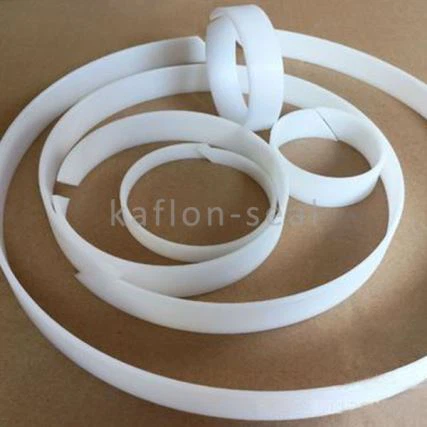
Hydraulic wear rings are typically made from materials with low friction coefficients, such as PTFE - filled polymers. These materials act as a buffer between the rotating and stationary parts, minimizing the direct contact and thus reducing friction. For example, the PTFE Filled Polymer Step Seal Ring is designed to provide excellent anti - friction properties. By reducing friction, the wear rings help to extend the service life of the pump components, reducing the frequency of maintenance and replacement.
2. Sealing Function
Another crucial function of hydraulic wear rings is sealing. In a pump, it is essential to prevent the leakage of the pumped fluid from the high - pressure side to the low - pressure side. Hydraulic wear rings create a tight seal between different chambers or components within the pump. This sealing action helps to maintain the pressure differential required for the proper operation of the pump.
For instance, the Wearable Piston Sealing Glyd Ring is specifically designed to provide effective sealing in piston - related applications. It can withstand high pressures and prevent fluid leakage, ensuring that the pump operates at its optimal efficiency. Without proper sealing, the pump may experience a loss of pressure, reduced flow rate, and decreased overall performance.
3. Centering and Alignment
Hydraulic wear rings also assist in centering and aligning the rotating parts of the pump. In a pump, the impeller needs to be precisely centered within the casing to ensure smooth and efficient operation. Misalignment can lead to uneven wear, vibration, and noise.
The wear rings act as guides, helping to keep the impeller in the correct position. They provide a stable support structure for the rotating components, reducing the risk of misalignment. This centering and alignment function contribute to the overall stability and reliability of the pump. For example, in a centrifugal pump, the wear rings help to maintain the correct clearance between the impeller and the casing, ensuring that the fluid flow is uniform and the pump operates without excessive vibration.
4. Protecting Against Erosion and Corrosion
Pumps are often used to handle various types of fluids, some of which may be corrosive or contain abrasive particles. Hydraulic wear rings can act as a protective barrier against erosion and corrosion. They are made from materials that are resistant to the effects of these harsh environments.
For example, certain wear rings are made from corrosion - resistant metals or polymers. The Polyurethane Piston Seal For Static Application is known for its excellent resistance to wear, corrosion, and chemical attack. By protecting the pump components from erosion and corrosion, the wear rings help to maintain the integrity of the pump and prevent premature failure.
5. Improving Pump Efficiency
All of the above functions of hydraulic wear rings ultimately contribute to improving the efficiency of the pump. By reducing friction, ensuring proper sealing, maintaining alignment, and protecting against erosion and corrosion, the pump can operate more smoothly and with less energy consumption.
A pump with well - functioning wear rings can achieve a higher flow rate and pressure with the same amount of input power. This improved efficiency not only saves energy but also reduces operating costs for the end - user. In industrial applications, where pumps are used continuously, even a small increase in efficiency can result in significant cost savings over time.
6. Different Types of Pumps and Wear Ring Applications
Hydraulic wear rings are used in various types of pumps, including centrifugal pumps, reciprocating pumps, and rotary pumps.
In centrifugal pumps, the wear rings are typically installed between the impeller and the casing. They help to control the leakage of the fluid from the high - pressure area around the impeller outlet to the low - pressure area at the impeller inlet. This leakage control is crucial for maintaining the pump's performance.
Reciprocating pumps use wear rings in the pistons and cylinders. The wear rings provide sealing and reduce friction between the moving piston and the stationary cylinder wall. They also help to prevent the backflow of the fluid during the reciprocating motion of the piston.
Rotary pumps, such as gear pumps and vane pumps, also rely on wear rings to reduce friction and ensure proper sealing between the rotating gears or vanes and the pump housing.


7. Material Selection for Hydraulic Wear Rings
The choice of material for hydraulic wear rings depends on several factors, including the type of fluid being pumped, the operating pressure and temperature, and the expected service life.
Common materials for wear rings include metals such as bronze and stainless steel, which are known for their strength and durability. Polymers, such as PTFE and polyurethane, are also widely used due to their low friction coefficients and excellent chemical resistance.
When selecting the material, it is important to consider the compatibility of the wear ring material with the pumped fluid. For example, if the fluid is highly corrosive, a corrosion - resistant polymer or a special alloy may be required.
8. Importance of Proper Installation and Maintenance
Proper installation and maintenance of hydraulic wear rings are essential for their optimal performance. During installation, it is important to ensure that the wear rings are correctly sized and installed in the right position. Any misalignment or improper fitting can lead to premature failure of the wear rings.
Regular maintenance, including inspection and replacement of worn - out wear rings, is also crucial. Over time, the wear rings may experience wear and tear, and their performance may degrade. By regularly inspecting the wear rings and replacing them when necessary, the pump can continue to operate efficiently and reliably.
Contact for Procurement
If you are in need of high - quality hydraulic wear rings for your pump applications, I encourage you to reach out for procurement and further discussions. We, as a professional hydraulic wear ring supplier, have a wide range of products to meet your specific requirements. Whether you need wear rings for centrifugal pumps, reciprocating pumps, or rotary pumps, we can provide you with the right solutions. Our products are designed to offer superior performance, durability, and efficiency, helping you to optimize the operation of your pumps.
References
- Karassik, I. J., Messina, J. P., Cooper, P. T., & Heald, C. C. (2008). Pump Handbook. McGraw - Hill Professional.
- Stepanoff, A. J. (1957). Centrifugal and Axial Flow Pumps: Theory, Design, and Application. John Wiley & Sons.
- Schaschke, R. (2010). Hydraulic Seals: A Guide to Selection, Installation, and Maintenance. Industrial Press Inc.