


 Popular Blog Posts



 Blog
BlogHey there! As a supplier of PTFE guide rings, I often get asked about the friction coefficient of these nifty little components. So, I thought I'd sit down and write a blog post to share some insights on this topic.
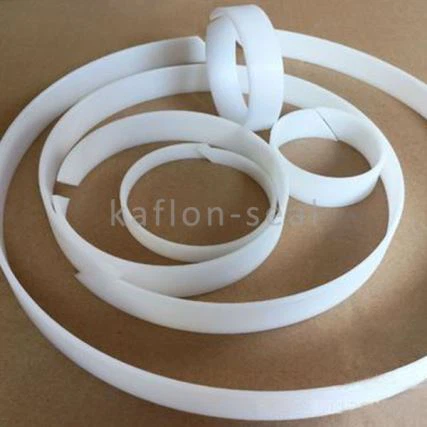
First off, let's talk a bit about what PTFE guide rings are. PTFE, or polytetrafluoroethylene, is a synthetic fluoropolymer known for its outstanding chemical resistance, low friction properties, and high-temperature stability. These characteristics make it an ideal material for guide rings, which are used in various applications, especially in hydraulic and pneumatic systems. Guide rings play a crucial role in guiding pistons and rods, preventing metal-to-metal contact, and reducing wear and tear on the equipment.
Now, the big question: what is the friction coefficient of PTFE guide rings? Well, the friction coefficient is a measure of the resistance to sliding between two surfaces in contact. In the case of PTFE guide rings, it refers to the resistance encountered when the ring slides against another surface, like a piston or a cylinder wall.
The friction coefficient of PTFE is generally quite low. Under normal conditions, the static friction coefficient of PTFE can range from about 0.04 to 0.2, while the dynamic friction coefficient is typically in the range of 0.02 to 0.04. These low values mean that PTFE guide rings can slide smoothly against other surfaces with minimal resistance, which is a huge advantage in many applications.
Why is a low friction coefficient so important? For starters, it reduces energy consumption. When the friction between the guide ring and the mating surface is low, less energy is required to move the piston or rod. This can lead to significant savings in power consumption, especially in large hydraulic or pneumatic systems that operate continuously.
Secondly, a low friction coefficient helps to extend the service life of the equipment. Less friction means less wear and tear on the guide ring and the mating surface. This reduces the need for frequent replacements and maintenance, which can save both time and money in the long run.
Another benefit of the low friction coefficient of PTFE guide rings is that it helps to improve the overall performance of the system. Smooth sliding action means more precise movement of the piston or rod, which can enhance the accuracy and efficiency of the system.
However, it's important to note that the friction coefficient of PTFE guide rings can be affected by several factors. One of the most significant factors is the surface finish of the mating surface. A rough surface can increase the friction coefficient, while a smooth surface can help to keep it low. That's why it's crucial to ensure that the mating surface is properly prepared and finished before installing the PTFE guide ring.
The operating conditions also play a role. Temperature, pressure, and the presence of lubricants can all affect the friction coefficient. For example, at high temperatures, the friction coefficient of PTFE may increase slightly. Similarly, the use of lubricants can further reduce the friction coefficient, but the type and quality of the lubricant need to be carefully selected to ensure compatibility with PTFE.


As a supplier of PTFE guide rings, I've seen firsthand the benefits that these components can bring to various industries. Whether it's in the automotive, aerospace, or industrial sectors, PTFE guide rings are widely used for their excellent performance and reliability.
If you're in the market for high-quality guide rings, we also offer other types of products that might interest you. For instance, we have Wear-resistant Guide Ring, which are designed to withstand heavy loads and harsh operating conditions. Our Phenolic Cloth Hydraulic Wiper are also a great choice for keeping hydraulic systems clean and free from contaminants. And if you're looking for an alternative to PTFE guide rings, our Phenolic Fabric Guide Rings offer good performance at a competitive price.
If you have any questions about PTFE guide rings or any of our other products, or if you're interested in purchasing, don't hesitate to reach out. We're here to help you find the right solutions for your specific needs. Just drop us a line, and we'll be happy to discuss your requirements and provide you with a quote.
In conclusion, the friction coefficient of PTFE guide rings is an important characteristic that contributes to their excellent performance. With a low friction coefficient, these guide rings can offer energy savings, extended service life, and improved system performance. But remember, the actual friction coefficient can be influenced by various factors, so it's essential to consider these when selecting and using PTFE guide rings.
References
- "Handbook of Polytetrafluoroethylene (PTFE) and Related Fluoroplastics" by K. L. Mittal
- "Hydraulic Seals: Design, Selection, and Application" by John W. Szydlowski