


 Popular Blog Posts



 Blog
BlogAs a Teflon seal supplier, I've spent a considerable amount of time exploring the various properties of Teflon seals, and one of the most crucial aspects is their elasticity. Elasticity plays a vital role in the performance and functionality of Teflon seals in a wide range of applications. In this blog, I'll delve into what the elasticity of Teflon seals entails, why it matters, and how it impacts their use in different industries.
Understanding Elasticity
Elasticity, in the context of materials science, refers to the ability of a material to deform under stress and then return to its original shape once the stress is removed. This property is quantified by the elastic modulus, which measures the stiffness of a material. A high elastic modulus indicates a stiffer material that is less likely to deform, while a low elastic modulus means the material is more flexible and can undergo significant deformation without permanent damage.
For Teflon seals, elasticity is essential because it allows them to adapt to irregular surfaces and maintain a tight seal. When a Teflon seal is installed in a mechanical system, it is often subjected to various forces, such as pressure, temperature changes, and vibration. The seal's elasticity enables it to conform to the shape of the mating surfaces, filling any gaps or irregularities and preventing the leakage of fluids or gases.
Factors Affecting the Elasticity of Teflon Seals
Several factors can influence the elasticity of Teflon seals. One of the primary factors is the type of Teflon material used. Teflon, also known as polytetrafluoroethylene (PTFE), is a family of fluoropolymers with different chemical compositions and properties. Some common types of Teflon used in seal manufacturing include F279 PCTFE, F250 TFM Virgin 1700, and F280 Rulon. Each of these materials has its own unique elastic properties, which can affect the performance of the seal.
Another factor that can impact the elasticity of Teflon seals is the manufacturing process. The way a Teflon seal is fabricated can influence its internal structure and, consequently, its elastic behavior. For example, seals that are molded under high pressure and temperature may have a more uniform structure and better elastic properties compared to those that are machined or cut from a sheet of Teflon.
Temperature is also a significant factor that can affect the elasticity of Teflon seals. Teflon is known for its excellent chemical resistance and high-temperature stability, but its elastic properties can change significantly with temperature. At low temperatures, Teflon becomes more brittle and less elastic, which can reduce its ability to form a tight seal. On the other hand, at high temperatures, Teflon may become more flexible but can also experience creep, which is the gradual deformation of the material under constant stress.
Importance of Elasticity in Teflon Seals
The elasticity of Teflon seals is crucial for several reasons. Firstly, it ensures a reliable and effective seal. By being able to deform and conform to the mating surfaces, Teflon seals can prevent the leakage of fluids or gases, which is essential in many industrial applications. For example, in the automotive industry, Teflon seals are used in engines, transmissions, and fuel systems to prevent the leakage of oil, coolant, and fuel. A leak in these systems can not only lead to performance issues but also pose a safety hazard.
Secondly, the elasticity of Teflon seals allows them to withstand dynamic conditions. In many mechanical systems, seals are subjected to constant movement, vibration, and pressure fluctuations. The ability of Teflon seals to adapt to these changing conditions and maintain their sealing performance is essential for the long-term reliability of the system. For instance, in hydraulic systems, Teflon seals are used to seal the pistons and cylinders, which are constantly moving and experiencing high pressures. The elasticity of the seals ensures that they can maintain a tight seal even under these demanding conditions.
Finally, the elasticity of Teflon seals can also contribute to their durability. By being able to deform and recover without permanent damage, Teflon seals can withstand repeated cycles of stress and strain, which can extend their service life. This is particularly important in applications where seals are difficult to access or replace, such as in aerospace and medical devices.
Measuring the Elasticity of Teflon Seals
There are several methods for measuring the elasticity of Teflon seals. One common method is the tensile test, which involves applying a stretching force to a sample of the seal material and measuring its deformation. The elastic modulus can then be calculated from the stress-strain curve obtained from the test. Another method is the compression test, which measures the seal's ability to deform under a compressive force. This test is particularly useful for evaluating the sealing performance of Teflon gaskets and O-rings.
In addition to these mechanical tests, non-destructive testing methods can also be used to assess the elasticity of Teflon seals. For example, ultrasonic testing can be used to detect internal defects or changes in the material's structure that may affect its elastic properties. This type of testing is often used in quality control and inspection processes to ensure that the seals meet the required specifications.
Applications of Teflon Seals Based on Elasticity
The unique elastic properties of Teflon seals make them suitable for a wide range of applications. In the chemical processing industry, Teflon seals are used in pumps, valves, and reactors to prevent the leakage of corrosive chemicals. The elasticity of the seals allows them to withstand the high pressures and temperatures associated with these processes and maintain a tight seal even in the presence of aggressive chemicals.
In the food and beverage industry, Teflon seals are used in equipment such as mixers, conveyors, and filling machines to ensure the hygienic and efficient operation of the production lines. The elasticity of the seals enables them to conform to the surfaces of the equipment and prevent the contamination of the food or beverage products.
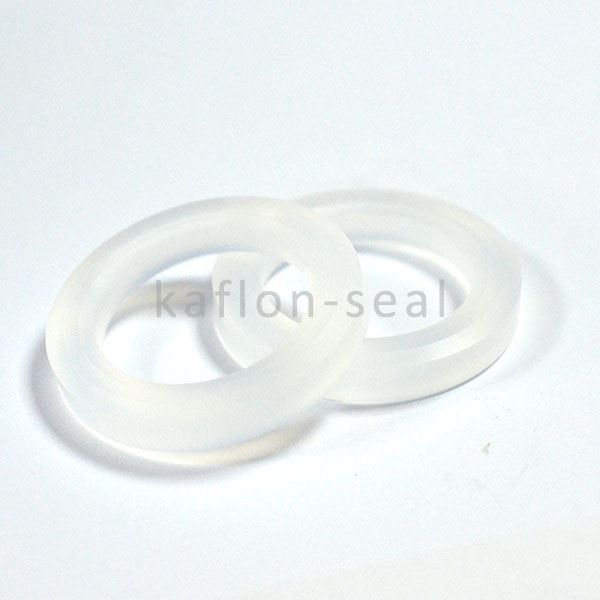

In the pharmaceutical industry, Teflon seals are used in drug manufacturing equipment, such as tablet presses and encapsulation machines. The seals' elasticity and chemical resistance make them ideal for maintaining a sterile environment and preventing the leakage of drugs or other substances.
Conclusion
In conclusion, the elasticity of Teflon seals is a critical property that determines their performance and functionality in various applications. By understanding the factors that affect the elasticity of Teflon seals and how to measure it, manufacturers can produce high-quality seals that meet the specific requirements of different industries.
As a Teflon seal supplier, I am committed to providing our customers with the best possible products and services. If you are in need of Teflon seals for your application, I encourage you to contact us for more information and to discuss your specific requirements. Our team of experts can help you select the right type of Teflon seal based on its elastic properties and other factors, ensuring that you get a reliable and effective sealing solution.
References
- Callister, W. D., & Rethwisch, D. G. (2017). Materials Science and Engineering: An Introduction. Wiley.
- Trott, D. M. (2004). Handbook of Fluoropolymer Science and Technology. Springer.
- ASTM International. (2019). ASTM D412 - Standard Test Methods for Vulcanized Rubber and Thermoplastic Elastomers - Tension.