


 Popular Blog Posts


 Blog
BlogHey there! As a Teflon seal supplier, I often get asked about the compression set of Teflon seals. So, let's dive right into it and break down what this term means, why it's important, and how it affects the performance of Teflon seals.
First off, what exactly is compression set? Well, compression set is a measure of a material's ability to recover its original shape after being compressed for a certain period of time under specific conditions. When a Teflon seal is installed in a system, it's typically compressed between two surfaces to create a tight seal. Over time, and especially under high temperatures, pressures, or continuous compression, the seal can lose some of its ability to bounce back to its original shape. This loss of elasticity is what we call compression set.
Now, why does compression set matter for Teflon seals? A high compression set means that the seal won't be able to maintain a proper seal over time. This can lead to leaks, which can be a huge problem in many applications. For example, in a valve system, a leaky seal can cause a loss of pressure, reduced efficiency, and even potential safety hazards. On the other hand, a low compression set indicates that the seal will retain its shape and sealing properties for a longer period, providing reliable performance and reducing the need for frequent replacements.
There are several factors that can affect the compression set of Teflon seals. One of the most significant factors is the type of Teflon material used. Teflon, also known as PTFE (polytetrafluoroethylene), is a popular choice for seals due to its excellent chemical resistance, low friction, and high temperature tolerance. However, different grades of PTFE can have different compression set characteristics.
For instance, F212 10% Graphite Filled PTFE is a type of PTFE that has been filled with 10% graphite. The addition of graphite improves the material's mechanical properties, including its compression set resistance. This makes it a great choice for applications where the seal will be subjected to moderate pressures and temperatures.
Another example is F220 25% Carbon Graphite Filled PTFE. This grade of PTFE contains 25% carbon graphite, which provides even better compression set resistance compared to the 10% graphite filled PTFE. It's suitable for more demanding applications, such as high-pressure and high-temperature environments.
The manufacturing process also plays a crucial role in determining the compression set of Teflon seals. Proper molding and curing techniques can help to optimize the material's properties and reduce the compression set. At our company, we use state-of-the-art manufacturing equipment and strict quality control measures to ensure that our Teflon seals have the lowest possible compression set and the highest level of performance.
In addition to the material and manufacturing process, the operating conditions can also have a significant impact on the compression set of Teflon seals. High temperatures can cause the material to soften and lose its elasticity, leading to a higher compression set. Similarly, high pressures can also increase the compression set by deforming the seal. Therefore, it's important to choose the right type of Teflon seal for the specific operating conditions.

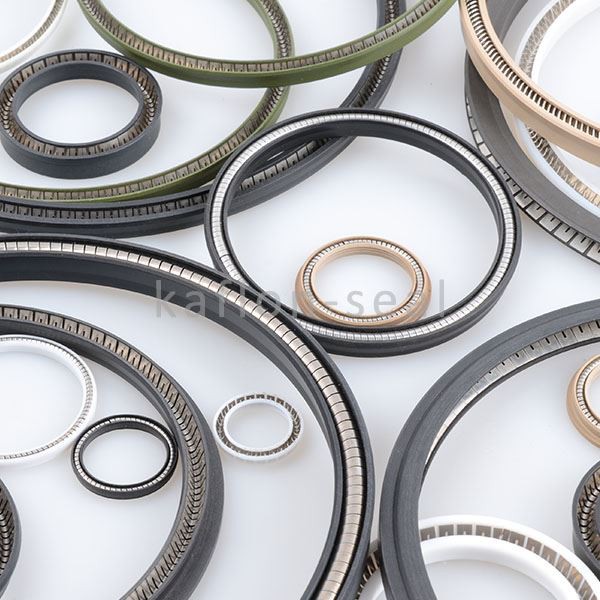
For example, if you're looking for a seal for a valve system, PTFE Lip Seal For Valve is a great option. These seals are designed to provide a reliable seal in valve applications, even under high pressures and temperatures. They have a low compression set, which means they'll maintain their sealing properties over time and reduce the risk of leaks.
So, how can you test the compression set of Teflon seals? There are several standard test methods available, such as ASTM D395. This test involves compressing the seal specimen to a specific percentage of its original thickness and then holding it under a constant load for a certain period of time at a specified temperature. After the test, the specimen is allowed to recover for a set period, and the remaining deformation is measured. The compression set is then calculated as a percentage of the original compression.
By understanding the compression set of Teflon seals and how it's affected by various factors, you can make an informed decision when choosing the right seal for your application. Whether you need a seal for a valve, a pump, or any other industrial equipment, we have a wide range of Teflon seals to meet your needs.
If you're interested in learning more about our Teflon seals or have any questions about compression set, feel free to reach out to us. We're here to help you find the best sealing solution for your specific requirements. Contact us today to start a conversation about your Teflon seal needs and let's work together to ensure the reliability and efficiency of your systems.
References
- ASTM D395 - Standard Test Methods for Rubber Property - Compression Set
- "Teflon (PTFE) Seals: Properties and Applications" - Industrial Sealing Handbook