


 Popular Blog Posts



 Blog
BlogTeflon, chemically known as polytetrafluoroethylene (PTFE), is a remarkable synthetic fluoropolymer with a wide range of applications, especially in the manufacturing of seals. As a Teflon seal supplier, I've witnessed firsthand the incredible chemical resistance that Teflon offers, making it an ideal choice for various industries. In this blog, we'll explore the chemical resistance of Teflon seals, its significance, and how it benefits different applications.
Understanding Teflon's Chemical Structure
To comprehend the chemical resistance of Teflon seals, we first need to understand the unique chemical structure of PTFE. Teflon is composed of carbon and fluorine atoms arranged in a long - chain polymer. The carbon - fluorine bond is one of the strongest in organic chemistry. This strong bond gives Teflon its exceptional chemical stability. The fluorine atoms form a protective sheath around the carbon backbone, shielding it from chemical attacks.
The high electronegativity of fluorine also contributes to Teflon's non - reactivity. It repels other chemicals, preventing them from interacting with the polymer chain. This property makes Teflon highly resistant to a vast array of chemicals, including acids, bases, solvents, and oxidizing agents.
Chemical Resistance in Different Environments
Acidic Environments
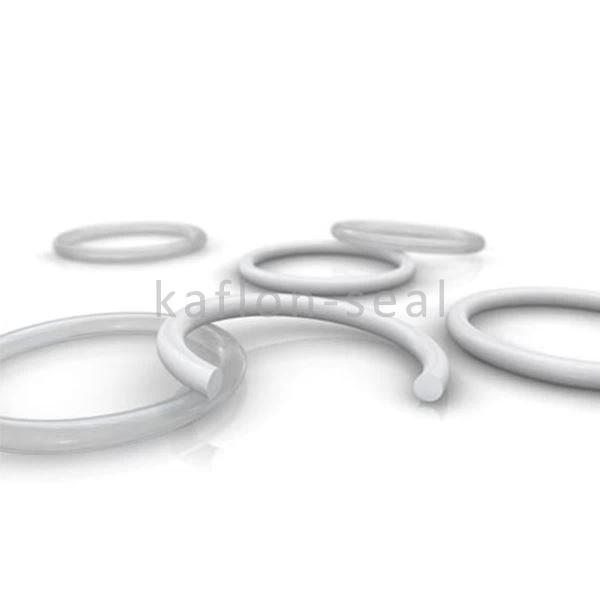
Teflon seals exhibit outstanding resistance to acids. Whether it's hydrochloric acid, sulfuric acid, or nitric acid, Teflon can withstand their corrosive effects. In industries such as chemical manufacturing, where strong acids are commonly used, Teflon seals ensure the integrity of the equipment. For example, in acid storage tanks, Teflon seals prevent leaks and protect the surrounding environment from acid spills. Our Anti - aging PTFE Oring is specifically designed to maintain its performance in acidic conditions over an extended period.
Basic Environments
Just as it resists acids, Teflon is also highly resistant to bases. Sodium hydroxide, potassium hydroxide, and other strong alkalis do not affect Teflon seals. In industries like pulp and paper manufacturing, where caustic solutions are used in the production process, Teflon seals provide reliable sealing solutions. They prevent the leakage of these corrosive bases, ensuring the safety of the workers and the proper functioning of the equipment.
Solvent Environments
Teflon is virtually insoluble in most common solvents. Organic solvents such as benzene, toluene, and acetone have no significant effect on Teflon seals. This makes Teflon an excellent choice for applications in the pharmaceutical and petrochemical industries, where solvents are frequently used in extraction, purification, and synthesis processes. Our Valves And Chemical Pipelines PTFE Oring is well - suited for these solvent - rich environments, providing a tight seal and preventing solvent leakage.
Oxidizing Agents
Oxidizing agents like hydrogen peroxide and chlorine can be extremely corrosive to many materials. However, Teflon seals can withstand their oxidative power. In water treatment plants, where chlorine is used for disinfection, Teflon seals are used in valves and pipes to prevent leakage and ensure the proper flow of the treated water.
Advantages of Teflon Seals' Chemical Resistance
Long - Term Durability
The chemical resistance of Teflon seals translates into long - term durability. Since they are not affected by the chemicals they come into contact with, they do not degrade or corrode easily. This means that equipment using Teflon seals requires less frequent maintenance and replacement, resulting in cost savings for the end - users.
Reliable Sealing Performance
Teflon seals maintain their sealing performance even in harsh chemical environments. They prevent leaks, which is crucial for the safety and efficiency of industrial processes. A single leak can lead to product contamination, environmental pollution, and even safety hazards. Teflon seals' ability to provide a reliable seal ensures the smooth operation of the equipment.
Compatibility with Diverse Chemicals
One of the significant advantages of Teflon seals is their compatibility with a wide range of chemicals. This eliminates the need to use different types of seals for different chemicals. In a multi - chemical environment, a single type of Teflon seal can be used, simplifying the inventory management and reducing the complexity of the sealing system.

Specialized Teflon Seal Products
We also offer specialized Teflon seal products, such as the F280 Rulon. This product combines the excellent chemical resistance of Teflon with enhanced mechanical properties. It has better wear resistance and lower friction coefficients compared to standard Teflon seals. This makes it suitable for applications where there is a high degree of movement and contact between the seal and other components, such as in pumps and valves.
Conclusion
In conclusion, the chemical resistance of Teflon seals is a key factor in their widespread use in various industries. Their ability to withstand acids, bases, solvents, and oxidizing agents makes them a reliable choice for sealing applications in harsh chemical environments. The long - term durability, reliable sealing performance, and compatibility with diverse chemicals offer significant advantages to our customers.
If you are in need of high - quality Teflon seals for your industrial applications, we are here to help. Our team of experts can provide you with the right sealing solutions tailored to your specific requirements. Contact us today to start a discussion about your Teflon seal needs and explore how our products can benefit your business.
References
- Billmeyer, F. W. (1984). Textbook of Polymer Science. Wiley - Interscience.
- Odian, G. (2004). Principles of Polymerization. Wiley.