


 Popular Blog Posts



 Blog
BlogWhat is the chemical resistance of PTFE Guide Rings?
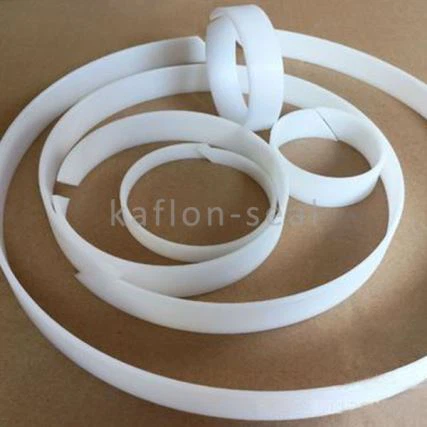
As a supplier of PTFE guide rings, I often get asked about the chemical resistance of these essential components. PTFE, or polytetrafluoroethylene, is a synthetic fluoropolymer of tetrafluoroethylene that has numerous applications due to its outstanding properties. One of the most remarkable features of PTFE is its exceptional chemical resistance, which makes PTFE guide rings highly sought - after in various industries.
Understanding PTFE's Chemical Structure
To fully comprehend the chemical resistance of PTFE guide rings, we need to look at the chemical structure of PTFE. PTFE has a carbon - fluorine (C - F) bond, which is one of the strongest in organic chemistry. The fluorine atoms form a protective sheath around the carbon backbone, shielding it from chemical attacks. This unique structure gives PTFE its well - known non - reactivity.
Resistance to Acids and Bases
PTFE guide rings exhibit excellent resistance to a wide range of acids and bases. Whether it's strong mineral acids like sulfuric acid, hydrochloric acid, or nitric acid, PTFE remains largely unaffected. These acids are highly corrosive and can quickly degrade many materials, but PTFE guide rings can withstand their harsh environment for extended periods.
Similarly, in alkaline environments, PTFE guide rings perform admirably. Strong bases such as sodium hydroxide and potassium hydroxide do not cause any significant chemical changes to PTFE. This makes PTFE guide rings suitable for use in chemical processing plants where both acidic and alkaline substances are handled.
Resistance to Organic Solvents
Organic solvents are another area where PTFE guide rings shine. Solvents like acetone, toluene, and chloroform, which are commonly used in laboratories and industrial processes, have little to no effect on PTFE. These solvents can dissolve or swell many polymers, but PTFE's non - reactive nature allows it to maintain its integrity when in contact with them.
In industries such as the pharmaceutical and petrochemical sectors, where organic solvents are frequently used, PTFE guide rings are a reliable choice. They can ensure the smooth operation of equipment by providing stable guiding functions even in the presence of these solvents.
Resistance to Oxidizing Agents
Oxidizing agents are substances that can cause oxidation reactions in other materials. PTFE guide rings show good resistance to many oxidizing agents. For example, hydrogen peroxide, a common oxidizer, does not corrode PTFE. This resistance is crucial in applications where oxidation can lead to material degradation and failure.
Limitations of PTFE's Chemical Resistance
While PTFE guide rings have excellent chemical resistance, they are not completely invulnerable. At extremely high temperatures, some highly reactive metals and certain molten alkali metals can react with PTFE. Also, under high - energy radiation, PTFE can undergo some structural changes, although this is a very specific and rare situation.
Applications of PTFE Guide Rings Based on Chemical Resistance
The chemical resistance of PTFE guide rings makes them suitable for a wide range of applications. In the chemical industry, they are used in pumps, valves, and pipelines to guide moving parts while being exposed to various chemicals. In the food and beverage industry, PTFE's non - reactivity and non - toxicity make it an ideal choice for guiding components in equipment that comes into contact with food products.


In the medical field, PTFE guide rings are used in medical devices where they need to resist the effects of disinfectants and other chemicals used in the healthcare environment.
Comparison with Other Guide Ring Materials
When compared with other guide ring materials such as POM Hydraulic Wiper, Hydraulic Polyurethane Wear Ring, and Phenolic Fabric Guide Rings, PTFE guide rings have a clear advantage in terms of chemical resistance. POM hydraulic wipers may have good mechanical properties but are more susceptible to certain chemicals. Hydraulic polyurethane wear rings, while having good wear resistance, can be attacked by some solvents and chemicals. Phenolic fabric guide rings also have limitations in their chemical resistance compared to PTFE.
Quality Assurance in PTFE Guide Rings
As a supplier, we ensure the highest quality of our PTFE guide rings. We source high - quality PTFE materials and use advanced manufacturing processes to produce guide rings that meet strict quality standards. Our quality control team conducts rigorous tests to ensure that the chemical resistance of our PTFE guide rings meets or exceeds industry requirements.
Importance of Chemical Resistance in Guide Rings
In any application where guide rings are used, chemical resistance is of utmost importance. If a guide ring is not chemically resistant, it can degrade over time when exposed to chemicals. This degradation can lead to dimensional changes, loss of mechanical properties, and ultimately, failure of the equipment. By using PTFE guide rings with excellent chemical resistance, the reliability and lifespan of the equipment can be significantly improved.
Conclusion
The chemical resistance of PTFE guide rings is one of their most outstanding features. Their ability to withstand a wide range of chemicals, including acids, bases, organic solvents, and oxidizing agents, makes them a valuable component in many industries. While they do have some limitations, their overall performance in chemical environments is superior to many other guide ring materials.
If you are in need of high - quality PTFE guide rings for your applications, we are here to provide you with the best solutions. Our extensive experience as a supplier allows us to offer products that meet your specific requirements. Contact us to discuss your needs and start a fruitful partnership in the procurement of PTFE guide rings.
References
- "Handbook of Fluoropolymer Science and Technology" by Harry L. Allcock, Frederick W. Lampe, and Joseph M. Mark.
- "Plastics in Medical Devices: Properties, Requirements, and Applications" by David G. Cleek and Richard P. Wool.
- Industry reports on the use of guide rings in various sectors.