


 Popular Blog Posts



 Blog
BlogHey there! As a hydraulic piston seal supplier, I've seen firsthand how different materials can make a huge difference in the performance of these seals. In this blog, I'm gonna break down the key differences between hydraulic piston seals made from various materials, so you can make an informed choice for your specific needs.
1. Nitrile Rubber (NBR) Seals
Nitrile rubber is one of the most commonly used materials for hydraulic piston seals, and for good reason. It's affordable, has excellent resistance to oil and fuel, and can handle a wide range of temperatures.
- Temperature Range: NBR seals can typically operate in temperatures ranging from -40°F to 212°F (-40°C to 100°C). This makes them suitable for a variety of applications, from automotive to industrial.
- Chemical Resistance: They offer great resistance to mineral oils, hydraulic fluids, and some solvents. However, they're not very resistant to ozone, sunlight, or polar solvents.
- Applications: NBR seals are widely used in general hydraulic systems, automotive engines, and agricultural machinery. If you're looking for a cost - effective solution for a standard hydraulic application, NBR seals are a great choice. Check out our Hydraulic Seals For Single And Double Acting for more options.
2. Fluorocarbon Rubber (FKM) Seals
Fluorocarbon rubber, also known as Viton, is a high - performance material that offers superior chemical and heat resistance compared to NBR.
- Temperature Range: FKM seals can handle much higher temperatures, typically from -22°F to 446°F (-30°C to 230°C). This makes them ideal for applications where high - temperature stability is crucial.
- Chemical Resistance: They have excellent resistance to a wide range of chemicals, including fuels, oils, acids, and solvents. FKM seals are also highly resistant to ozone and sunlight.
- Applications: These seals are commonly used in aerospace, chemical processing, and high - temperature hydraulic systems. If your application involves exposure to harsh chemicals or high temperatures, FKM seals are the way to go.
3. Polyurethane (PU) Seals
Polyurethane is a versatile material that combines the best of both worlds - high wear resistance and good elasticity.
- Wear Resistance: PU seals are extremely wear - resistant, making them suitable for applications with high - pressure and high - speed movement. They can withstand abrasive particles and have a long service life.
- Elasticity: They have excellent elasticity, which allows them to maintain a tight seal even under dynamic conditions. This helps prevent leakage and ensures reliable performance.
- Temperature Range: PU seals can operate in temperatures ranging from -40°F to 185°F (-40°C to 85°C). However, their performance may degrade at higher temperatures.
- Applications: Polyurethane seals are often used in hydraulic cylinders, construction equipment, and material handling systems. Check out our Hydraulic Sealing Glyd Ring Seal which might use polyurethane materials in some of our products.
4. Polytetrafluoroethylene (PTFE) Seals
PTFE, also known as Teflon, is a unique material with some outstanding properties.
- Low Friction: PTFE has an extremely low coefficient of friction, which means less energy is wasted in the form of heat during operation. This results in improved efficiency and reduced wear on the seal and other components.
- Chemical Resistance: It has excellent chemical resistance, being able to withstand almost all chemicals, including strong acids and bases.
- Temperature Range: PTFE seals can operate in a wide temperature range, from -328°F to 500°F (-200°C to 260°C).
- Applications: PTFE seals are used in applications where low friction and high chemical resistance are required, such as in the food and beverage industry, pharmaceutical industry, and high - precision hydraulic systems.
5. Polyoxymethylene (POM) Guide Rings
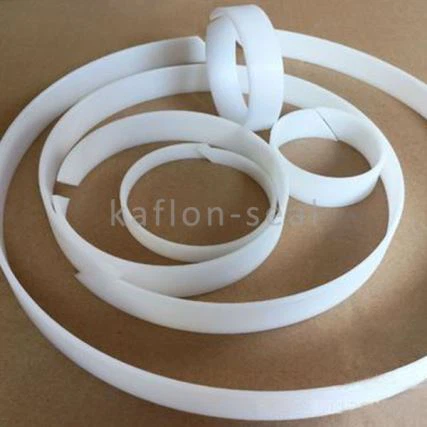
POM guide rings are often used in conjunction with hydraulic piston seals to provide support and guidance.
- Low Friction and Wear Resistance: POM has low friction properties and good wear resistance, which helps reduce the load on the seals and extends their service life.
- Dimensional Stability: It has excellent dimensional stability, ensuring that the guide ring maintains its shape and size under different operating conditions.
- Applications: POM guide rings are commonly used in hydraulic cylinders to prevent metal - to - metal contact and improve the overall performance of the system. You can find our POM Guide Ring For Hydraulic for your specific needs.
Comparing the Materials
When choosing a hydraulic piston seal material, you need to consider several factors:
- Operating Conditions: Think about the temperature, pressure, and chemical environment in which the seal will operate. For example, if you're working in a high - temperature and chemical - rich environment, FKM or PTFE seals might be the best choice.
- Cost: NBR seals are generally the most affordable option, while FKM and PTFE seals are more expensive due to their high - performance properties. You need to balance the cost with the performance requirements of your application.
- Wear and Durability: If your application involves high - speed or high - pressure movement, PU or PTFE seals may be more suitable because of their excellent wear resistance.
Conclusion
As you can see, the choice of material for hydraulic piston seals can have a significant impact on the performance and longevity of your hydraulic system. Whether you need a cost - effective solution for a standard application or a high - performance seal for a demanding environment, there's a material out there that's right for you.


If you're still not sure which material is best for your specific needs, don't hesitate to reach out to us. We're here to help you make the right choice and ensure that your hydraulic system operates at its best. Contact us today to start a conversation about your procurement needs, and let's find the perfect hydraulic piston seals for your application.
References
- "Sealing Technology Handbook"
- "Hydraulic Seals: Principles, Design, and Applications"