


 Popular Blog Posts



 Blog
BlogHey there! As a supplier of Polyurethanes Seal, I've been in the game for quite some time, and I know how crucial it is to test the performance of these seals. In this blog, I'm gonna share with you how to test the performance of Polyurethanes Seal, based on my hands - on experience.
Why Testing Polyurethanes Seal Performance is a Big Deal
First off, let's talk about why we even bother testing these seals. Polyurethanes seals are used in a wide range of applications, from automotive to industrial machinery. They need to withstand different conditions like pressure, temperature, and chemical exposure. If a seal fails, it can lead to leaks, equipment breakdowns, and even safety hazards. So, making sure they perform well is super important.
Hardness Testing
One of the most basic tests is hardness testing. The hardness of a polyurethane seal affects its flexibility and resistance to wear. We usually use a durometer to measure the hardness. It's a simple tool that presses a small indentor into the seal material and gives a reading on a scale.
For example, in applications where the seal needs to be more flexible, like in some hydraulic systems, we might want a softer seal with a lower durometer reading. On the other hand, for applications that require high - wear resistance, like in heavy - duty machinery, a harder seal with a higher durometer reading would be more suitable.
Tensile Strength Testing
Tensile strength is another key performance indicator. It measures how much pulling force the seal can withstand before it breaks. To test this, we cut a sample of the seal into a specific shape, usually a dumbbell shape, and then use a tensile testing machine.
The machine slowly pulls the sample at a constant speed until it breaks. During the test, it records the maximum force applied and the elongation of the sample. A high tensile strength means the seal can handle more stress without tearing apart. For instance, in a high - pressure pipeline, a seal with good tensile strength is essential to prevent it from bursting under the pressure.
Elongation at Break Testing
Elongation at break is closely related to tensile strength. It tells us how much the seal can stretch before it breaks. This is important because in many applications, the seal might be subjected to some stretching during installation or operation.
We calculate the elongation at break by measuring the length of the sample before and after the tensile test. A high elongation at break indicates that the seal is more flexible and can adapt to different shapes and movements. For example, in a flexible joint, a seal with high elongation at break can better accommodate the movement without cracking.
Compression Set Testing
Compression set is a measure of how well the seal returns to its original shape after being compressed. In many applications, seals are compressed between two surfaces to create a tight seal. If the seal doesn't return to its original shape after the compression is removed, it can lead to leaks.
To test compression set, we compress the seal sample to a certain percentage of its original thickness for a specific period of time at a given temperature. Then we release the compression and measure the thickness of the sample after a recovery period. A low compression set value means the seal has good elasticity and can maintain a good seal over time.
Chemical Resistance Testing
Polyurethane seals often come into contact with various chemicals, such as oils, solvents, and fuels. Chemical resistance testing is crucial to ensure that the seal doesn't degrade or swell when exposed to these chemicals.
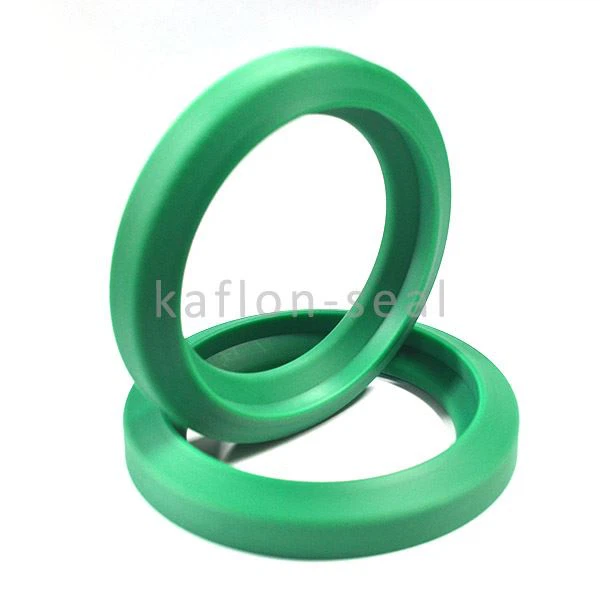
We usually immerse the seal sample in the chemical for a certain period of time at a specific temperature. Then we measure the changes in weight, volume, hardness, and tensile properties of the sample. For example, if you're looking for a seal for a fuel system, you might want to test its resistance to gasoline or diesel. We have some great options for chemical - resistant seals, like our Fracturing Truck PU Green Seals, which are designed to withstand harsh chemical environments.
Abrasion Resistance Testing
Abrasion resistance is important for seals that are in contact with moving parts. Seals need to be able to resist wear and tear caused by friction. We can use different methods to test abrasion resistance, such as the Taber abraser test.
In the Taber abraser test, a rotating wheel with an abrasive material rubs against the seal sample for a certain number of cycles. Then we measure the weight loss of the sample to evaluate its abrasion resistance. A seal with good abrasion resistance will have a lower weight loss. For example, in a pump where the seal is constantly in contact with the rotating shaft, an abrasion - resistant seal is essential to ensure a long service life.
Temperature Resistance Testing
Temperature can have a significant impact on the performance of polyurethane seals. At high temperatures, the seal might become softer and lose its mechanical properties, while at low temperatures, it might become brittle and crack.
We test temperature resistance by subjecting the seal sample to different temperature conditions. We can use an oven to test high - temperature performance and a freezer to test low - temperature performance. During the test, we monitor the changes in hardness, tensile strength, and other properties. For example, in an engine where the temperature can vary widely, a seal with good temperature resistance is necessary.
Our Product Range
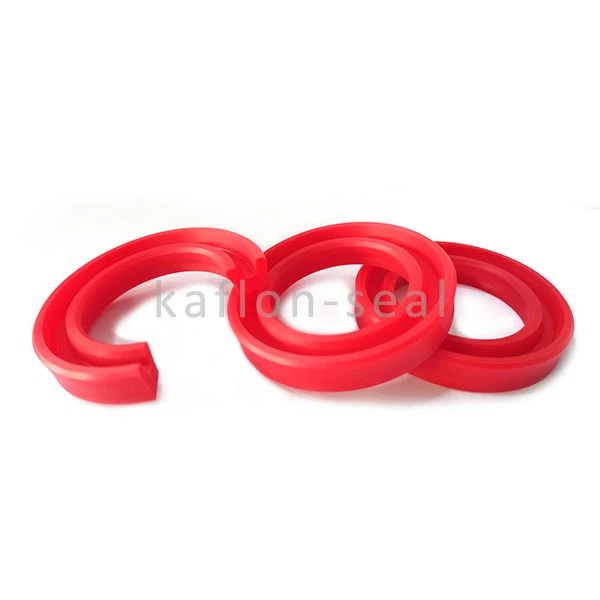
We offer a wide range of polyurethane seals to meet different application requirements. For example, our Paraffin Oil Resistance TPU Seal is specifically designed to resist the effects of paraffin oil. It has excellent chemical resistance and mechanical properties, making it a great choice for applications in the oil and gas industry.
Another product is our Butane Resistance Customized PU Seal Ring. This seal ring is customized to meet the specific needs of applications where butane resistance is required. It can be tailored to different sizes and shapes to fit your equipment perfectly.
Conclusion
Testing the performance of polyurethane seals is a comprehensive process that involves multiple aspects. By conducting these tests, we can ensure that our seals meet the high - quality standards required by different applications. Whether it's hardness, tensile strength, chemical resistance, or temperature resistance, each performance indicator plays an important role in the overall performance of the seal.
If you're in the market for high - quality polyurethane seals, we're here to help. We have the expertise and the products to meet your needs. Don't hesitate to contact us for more information and to start a procurement negotiation. We're looking forward to working with you!
References
- ASTM International Standards for elastomeric materials testing
- Rubber World Magazine articles on polyurethane seal performance testing
- Technical literature from polyurethane material manufacturers