


 Popular Blog Posts



 Blog
BlogCalculating the torque required for installing Rotary Glyd Rings is a crucial step in ensuring their proper functioning and longevity. As a supplier of Rotary Glyd Rings, I understand the importance of providing accurate information to our customers. In this blog post, I will guide you through the process of calculating the installation torque, taking into account various factors that can affect it.
Understanding Rotary Glyd Rings
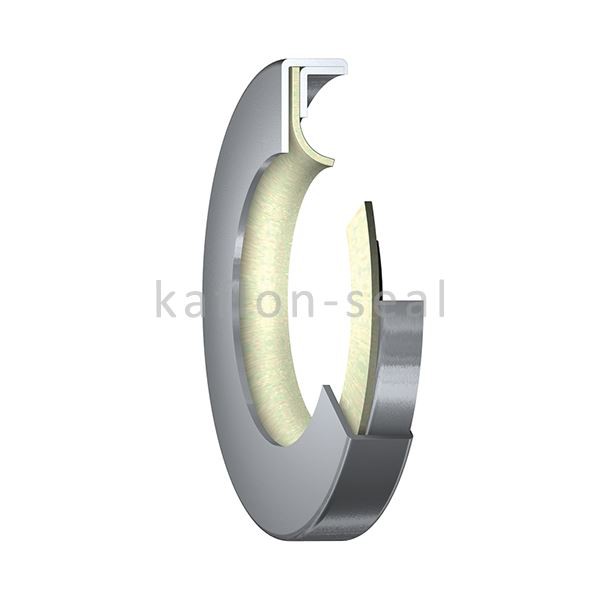
Before we dive into the torque calculation, let's briefly understand what Rotary Glyd Rings are. Rotary Glyd Rings are a type of sealing device used in hydraulic and pneumatic applications. They are designed to provide a dynamic seal between a rotating shaft and a housing, preventing the leakage of fluid or gas. These rings are typically made of PTFE (polytetrafluoroethylene) or other high-performance materials, which offer excellent chemical resistance, low friction, and high wear resistance.
Factors Affecting Installation Torque
Several factors can influence the torque required for installing Rotary Glyd Rings. Understanding these factors is essential for accurate torque calculation. Here are some of the key factors to consider:
- Ring Dimensions: The size and cross-sectional shape of the Rotary Glyd Ring play a significant role in determining the installation torque. Larger rings generally require more torque to install compared to smaller ones. Additionally, the cross-sectional shape can affect the friction between the ring and the shaft or housing, which in turn affects the torque.
- Shaft and Housing Materials: The materials of the shaft and housing can also impact the installation torque. Different materials have different surface finishes and coefficients of friction, which can affect the ease of installation. For example, a smooth shaft surface will require less torque compared to a rough surface.
- Lubrication: Proper lubrication is crucial for reducing friction during the installation process. Using a suitable lubricant can significantly reduce the installation torque and prevent damage to the ring. The type and amount of lubricant used can also affect the torque.
- Interference Fit: The interference fit between the Rotary Glyd Ring and the shaft or housing is another important factor. An interference fit is the amount by which the ring's inner diameter is smaller than the shaft diameter or the outer diameter is larger than the housing diameter. A larger interference fit will require more torque to install the ring.
Calculating the Installation Torque
To calculate the torque required for installing Rotary Glyd Rings, you can use the following formula:
[T = F \times r]
Where:
- (T) is the installation torque (in Nm or lb-ft)
- (F) is the force required to install the ring (in N or lb)
- (r) is the radius of the shaft or housing (in m or ft)
The force required to install the ring can be calculated using the following formula:
[F = \mu \times P \times A]
Where:
- (\mu) is the coefficient of friction between the ring and the shaft or housing
- (P) is the pressure exerted on the ring during installation (in Pa or psi)
- (A) is the contact area between the ring and the shaft or housing (in m² or in²)
The coefficient of friction ((\mu)) depends on the materials of the ring, shaft, and housing, as well as the lubrication used. You can find the coefficient of friction values in the product documentation or by conducting friction tests.
The pressure ((P)) exerted on the ring during installation can be estimated based on the interference fit and the elastic properties of the ring material. The contact area ((A)) can be calculated based on the dimensions of the ring and the shaft or housing.
Example Calculation
Let's consider an example to illustrate the torque calculation process. Suppose we have a Rotary Glyd Ring with an inner diameter of 50 mm, an outer diameter of 60 mm, and a cross-sectional width of 5 mm. The shaft diameter is 50 mm, and the housing diameter is 60 mm. The coefficient of friction between the ring and the shaft is 0.1, and the pressure exerted on the ring during installation is 10 MPa.
First, we need to calculate the contact area ((A)) between the ring and the shaft:
[A = \pi \times d \times w]
Where:
- (d) is the shaft diameter (in m)
- (w) is the cross-sectional width of the ring (in m)
[A = \pi \times 0.05 \times 0.005 = 7.85 \times 10^{-4} m^2]
Next, we can calculate the force ((F)) required to install the ring:
[F = \mu \times P \times A = 0.1 \times 10 \times 10^6 \times 7.85 \times 10^{-4} = 785 N]
Finally, we can calculate the installation torque ((T)):
[T = F \times r = 785 \times 0.025 = 19.625 Nm]
Tips for Installation
Here are some tips to ensure a successful installation of Rotary Glyd Rings:

- Prepare the Shaft and Housing: Before installing the ring, make sure the shaft and housing surfaces are clean, smooth, and free of any burrs or scratches. This will help reduce friction and prevent damage to the ring.
- Use Proper Lubrication: Apply a suitable lubricant to the shaft and the inner surface of the ring to reduce friction during installation. Make sure to use a lubricant that is compatible with the ring material and the application.
- Install the Ring Carefully: Use a proper installation tool to install the ring evenly and smoothly. Avoid using excessive force or twisting the ring during installation, as this can cause damage to the ring.
- Check the Installation: After installing the ring, check for proper alignment and seating. Make sure the ring is fully seated in the groove and there are no gaps or misalignments.
Conclusion
Calculating the torque required for installing Rotary Glyd Rings is an important step in ensuring their proper functioning and longevity. By considering the factors that affect the installation torque and using the appropriate formulas, you can accurately calculate the torque and install the rings correctly. As a supplier of Rotary Glyd Rings, we are committed to providing our customers with high-quality products and technical support. If you have any questions or need further assistance with the installation of Rotary Glyd Rings, please feel free to [contact us for procurement and negotiation]. We will be happy to help you.
References
- "Sealing Technology Handbook" by John Neale
- "Hydraulic Seals: Design, Application, and Testing" by Peter K. Johnston
- "Rotary Shaft Seals: Principles and Practice" by David A. Dowson
In addition to Rotary Glyd Rings, we also offer a wide range of related products, such as Rotary PTFE Lips Stainless Oil Seal and PTFE Stainless Rotary Shaft Seal. For more information on friction coefficients related to our PTFE oil seals, you can visit Friction Coefficients PTFE Oil Seal Seal. If you are interested in any of our products or have specific requirements, don't hesitate to reach out for procurement discussions.