


 Popular Blog Posts



 Blog
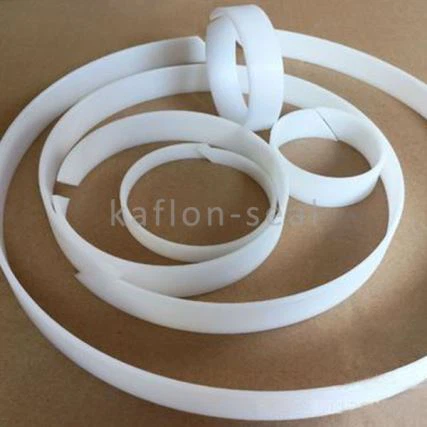
BlogHey there! As a supplier of PTFE Guide Rings, I often get asked how these rings stack up against bronze guide rings. So, I thought I'd dive deep into this topic and share some insights.
Material Properties
Let's start with the basics - the material properties. PTFE, or polytetrafluoroethylene, is a synthetic fluoropolymer known for its low friction coefficient. It's like the slippery guy in the material world. On the other hand, bronze is an alloy made primarily of copper and tin, with a reputation for being tough and durable.
PTFE guide rings have this amazing self - lubricating property. This means they can reduce the need for external lubrication in many applications. For instance, in a hydraulic system, less lubrication not only simplifies maintenance but also reduces the risk of fluid leaks. Bronze guide rings, however, rely more on external lubrication to function smoothly. Without proper lubrication, they can experience more wear and tear over time.
In terms of chemical resistance, PTFE is a champ. It can withstand a wide range of chemicals, acids, and solvents. This makes it a great choice for applications where the guide rings might come into contact with harsh substances. Bronze, while fairly resistant to corrosion, can be affected by certain chemicals, especially acidic ones. If you're working in an environment with a lot of chemical exposure, PTFE guide rings are definitely the way to go.
Performance in Different Environments
Now, let's talk about how these guide rings perform in different environments. PTFE guide rings are excellent in high - temperature environments. They can maintain their properties at temperatures up to 260°C (500°F). This makes them suitable for applications like industrial ovens or high - performance engines. Bronze guide rings, although they can handle high temperatures to some extent, start to lose their strength and hardness at relatively lower temperatures compared to PTFE.
In low - temperature environments, PTFE also has an edge. It remains flexible and doesn't become brittle like some other materials. This flexibility ensures that the guide rings can still function properly even in cold conditions. Bronze, on the other hand, can become more brittle in extremely cold temperatures, which might lead to cracking or failure.
When it comes to moisture, PTFE is hydrophobic, meaning it repels water. This is a huge advantage in wet or humid environments. It prevents the formation of rust and corrosion, which can degrade the performance of the guide rings. Bronze, while it has some resistance to moisture, can still corrode over time, especially if not properly protected.
Wear and Tear
Wear and tear is a big deal when it comes to guide rings. PTFE guide rings have a relatively low wear rate due to their self - lubricating nature. They can slide smoothly against other surfaces, reducing friction and minimizing the amount of material that gets worn away. This results in a longer service life, which is great for cost - effectiveness in the long run.


Bronze guide rings, while they are strong and durable, can experience more wear, especially if the lubrication is not maintained properly. The friction between the bronze and other surfaces can cause the material to wear down, leading to a shorter lifespan. In applications where the guide rings are subject to high loads or frequent movement, the difference in wear rates between PTFE and bronze can be quite significant.
Cost Considerations
Cost is always an important factor in any purchasing decision. PTFE guide rings are generally more expensive than bronze guide rings upfront. However, when you consider the long - term costs, the picture might change. Since PTFE guide rings have a longer service life and require less maintenance, you might end up saving money in the long run. You won't have to replace them as often, and you'll save on lubrication costs.
Bronze guide rings are cheaper to buy initially, but the cost of maintenance, including lubrication and potential replacement due to wear, can add up over time. So, if you're on a tight budget in the short term, bronze might seem like the better option. But if you're looking at the big picture, PTFE guide rings could be a more cost - effective choice.
Installation and Compatibility
Installing PTFE guide rings is often easier than installing bronze guide rings. PTFE is a lighter material, which makes it easier to handle. It also has a lower stiffness, so it can be more easily bent or shaped to fit into different applications. This flexibility can save time during the installation process.
In terms of compatibility, PTFE guide rings can be used with a wider range of materials. They can work well with both metal and non - metal components. Bronze guide rings, while they are compatible with many metals, might have some compatibility issues with certain non - metal materials.
Other Types of Guide Rings
There are also other types of guide rings in the market, such as POM Guide Rings and Phenolic Fabric Guide Rings. POM guide rings are known for their high mechanical strength and good dimensional stability. They are often used in applications where precision is required. Phenolic fabric guide rings are made from a composite material and offer good wear resistance and low friction. However, when compared to PTFE guide rings, they might not have the same level of chemical resistance or high - temperature performance.
If you're interested in learning more about PTFE guide rings, you can check out our PTFE Guide Rings page.
Conclusion
So, in conclusion, both PTFE guide rings and bronze guide rings have their own advantages and disadvantages. PTFE guide rings are great for applications where low friction, high chemical resistance, and long - term performance are important. They are also suitable for a wide range of environments, from high - temperature to low - temperature and wet conditions. Bronze guide rings, on the other hand, are a more budget - friendly option in the short term and are still a good choice for applications with less demanding conditions.
If you're in the market for guide rings and want to discuss which option is best for your specific application, don't hesitate to reach out. I'd be more than happy to help you make the right decision. Whether it's PTFE, bronze, or another type of guide ring, I can provide you with the information and support you need.
References
- "Materials Science and Engineering: An Introduction" by William D. Callister Jr.
- "Handbook of Tribology: Materials, Coatings, and Surface Treatments" edited by Bharat Bhushan.