


 Popular Blog Posts



 Blog
BlogIn the dynamic world of industrial components, Pom Guide Rings have emerged as a popular choice for many applications. As a supplier of Pom Guide Rings, I've had the privilege of witnessing their widespread use and understanding their capabilities. However, like any product, they are not without limitations. In this blog, we'll delve into the potential drawbacks of Pom Guide Rings to provide a comprehensive view for those considering their use.
Material Properties and Temperature Limitations
Pom, or Polyoxymethylene, is a high - performance engineering plastic known for its excellent mechanical properties, such as high stiffness, low friction, and good dimensional stability. These qualities make Pom Guide Rings suitable for a variety of hydraulic and pneumatic applications. However, one of the primary limitations of Pom Guide Rings lies in their temperature resistance.
Pom has a relatively low melting point compared to some other engineering plastics. The typical continuous use temperature range for Pom is around -40°C to 100°C. Beyond this range, the material can start to lose its mechanical properties. At high temperatures, Pom may become softer, which can lead to increased wear and deformation of the guide rings. This is particularly problematic in applications where the operating environment is subject to extreme heat, such as in some industrial furnaces or high - power hydraulic systems that generate a significant amount of heat during operation.
On the other hand, at very low temperatures, Pom can become brittle. This brittleness increases the risk of cracking or breaking, especially under high - stress conditions. For example, in cold storage facilities or Arctic - based industrial operations, the low - temperature brittleness of Pom Guide Rings can pose a significant challenge, potentially leading to premature failure of the components they are part of.
Chemical Resistance
Another area where Pom Guide Rings have limitations is in their chemical resistance. While Pom has good resistance to many common solvents and chemicals, it is not compatible with all substances. For instance, it is susceptible to attack by strong acids and alkalis. Exposure to these chemicals can cause the material to degrade, leading to a loss of its mechanical properties and a reduction in the effectiveness of the guide rings.
In applications where the guide rings come into contact with aggressive chemicals, such as in chemical processing plants or wastewater treatment facilities, the use of Pom Guide Rings may not be advisable. In such cases, alternative materials like PTFE Guide Rings may be more suitable. PTFE has excellent chemical resistance and can withstand a wide range of corrosive substances, making it a better choice for harsh chemical environments.
Wear Resistance under High Loads
Although Pom Guide Rings are generally known for their good wear resistance, they may face limitations when subjected to extremely high loads. Under heavy loads, the surface of the Pom guide ring can experience accelerated wear. This is because the high pressure can cause the material to deform plastically, leading to increased friction and wear between the guide ring and the mating surface.
In applications with high - load requirements, such as heavy - duty construction equipment or large - scale industrial presses, the wear rate of Pom Guide Rings may be unacceptably high. This can result in frequent replacement of the guide rings, increasing maintenance costs and downtime. To address this issue, some users may opt for more wear - resistant materials or use additional lubrication to reduce the friction and wear on the Pom guide rings. However, these solutions may not always be practical or cost - effective.
Dimensional Stability in Humid Environments
Pom has a certain degree of moisture absorption. When exposed to a humid environment, the material can absorb water, which can cause it to swell. This swelling can lead to changes in the dimensions of the Pom Guide Rings, potentially affecting their fit and performance.
In applications where precise dimensional control is crucial, such as in high - precision machining or aerospace components, the dimensional instability of Pom Guide Rings in humid environments can be a significant drawback. For example, if the guide ring swells due to moisture absorption, it may cause interference with other components, leading to binding or improper operation of the system. In such cases, materials with lower moisture absorption, like Phenolic Cloth Hydraulic Wiper, may be a better alternative. Phenolic cloth materials are known for their low moisture absorption and good dimensional stability, even in humid conditions.
Comparison with Alternative Materials
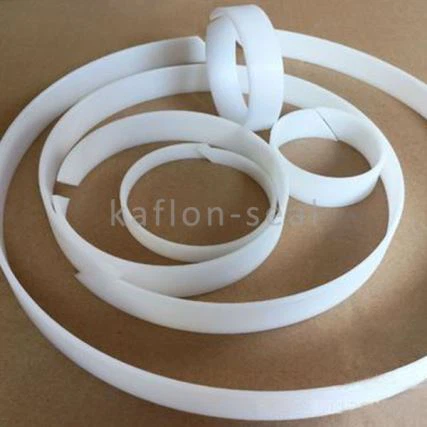
When considering the limitations of Pom Guide Rings, it's important to compare them with alternative materials available in the market. As mentioned earlier, PTFE Guide Rings offer excellent chemical resistance and can operate at a wider temperature range compared to Pom. They also have a very low coefficient of friction, which can reduce wear and energy consumption in some applications.
Another alternative is the use of metal guide rings, such as bronze or steel. Metal guide rings generally have higher strength and better wear resistance under high loads compared to Pom. They are also less affected by temperature and chemical exposure in many cases. However, metal guide rings are usually heavier and more expensive than Pom Guide Rings, and they may require more complex manufacturing processes.
Mitigating the Limitations
Despite the limitations of Pom Guide Rings, there are several ways to mitigate these issues. For temperature - related problems, proper thermal management can be implemented. This may include the use of cooling systems in high - temperature applications or insulation in low - temperature environments. Additionally, selecting the appropriate grade of Pom with improved temperature resistance can also help to extend the operating temperature range of the guide rings.
To address chemical resistance issues, a protective coating can be applied to the Pom guide rings. This coating can act as a barrier between the Pom material and the aggressive chemicals, reducing the risk of chemical attack. In terms of wear resistance under high loads, optimizing the design of the guide ring and the mating surface can help to distribute the load more evenly, reducing the stress on the guide ring and minimizing wear.
Conclusion
In conclusion, while Pom Guide Rings offer many advantages, such as good mechanical properties, low friction, and relatively low cost, they do have limitations. These limitations include temperature and chemical resistance, wear resistance under high loads, and dimensional stability in humid environments. However, by understanding these limitations and taking appropriate measures to mitigate them, Pom Guide Rings can still be a viable option for many applications.


As a supplier of Pom Guide Rings, I'm committed to providing our customers with the best - possible solutions. We understand that each application has its unique requirements, and we work closely with our customers to determine the most suitable materials and designs for their specific needs. If you're considering using Pom Guide Rings or have any questions about their limitations and how to overcome them, please don't hesitate to contact us for a detailed discussion. We're here to help you make the right choice for your industrial components.
References
- "Engineering Plastics Handbook" - A comprehensive reference on the properties and applications of various engineering plastics, including Pom.
- Technical literature from material manufacturers, which provides detailed information on the performance and limitations of Pom materials.
- Industry case studies and research papers on the use of guide rings in different applications, highlighting the challenges and solutions related to Pom Guide Rings.