


 Popular Blog Posts



 Blog
BlogCan PTFE Guide Rings be used in corrosive gas environments?
Hey there! I'm a supplier of PTFE guide rings, and I often get asked whether these nifty little components can hold up in corrosive gas environments. So, I thought I'd take a deep dive into this topic and share my insights with you.
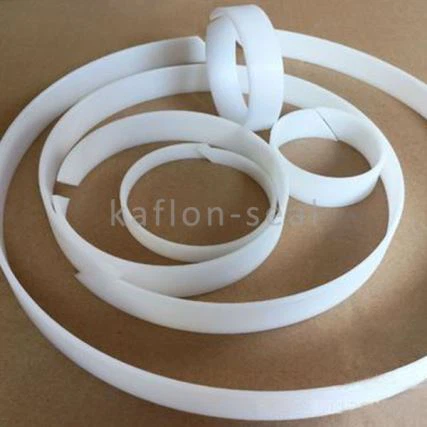
First off, let's talk a bit about what PTFE guide rings are. PTFE, or polytetrafluoroethylene, is a synthetic fluoropolymer of tetrafluoroethylene. It's well - known for its non - stick properties, which you've probably seen on your kitchen pans. But in the industrial world, PTFE guide rings are used in a variety of applications, like hydraulic systems. They help to guide pistons and rods, ensuring smooth and efficient operation. You can check out more about PTFE Guide Rings on our website.


Now, onto the big question: can they handle corrosive gases? Well, PTFE has some pretty amazing chemical resistance. It's highly resistant to a wide range of chemicals, including many acids, bases, and solvents. This is because of its strong carbon - fluorine bonds, which are very stable and difficult to break.
In many corrosive gas environments, PTFE guide rings can be a great choice. For example, in environments where there are low - concentration acidic gases like sulfur dioxide or nitrogen oxides, PTFE can resist corrosion for a long time. These gases might be present in industrial exhausts or in some chemical processing plants. The PTFE's chemical inertness means that it won't react with these gases, so the guide rings can maintain their shape and functionality.
But it's not all sunshine and rainbows. There are some corrosive gases that can pose a challenge even to PTFE. Fluorine gas, for instance, is extremely reactive. It can break the carbon - fluorine bonds in PTFE, leading to degradation of the material. So, if you're dealing with a high - concentration fluorine gas environment, PTFE guide rings might not be the best option.
Another factor to consider is temperature. High temperatures can accelerate the chemical reactions between PTFE and corrosive gases. Even if a gas doesn't normally react with PTFE at room temperature, it might start to cause problems when the temperature rises. So, in high - temperature corrosive gas environments, you need to be extra careful.
Let's compare PTFE guide rings with some other types of guide rings in the context of corrosive gas environments. Hydraulic Polyurethane Wear Ring are another popular option. Polyurethane is a tough and flexible material, but its chemical resistance is not as good as PTFE. In many corrosive gas environments, polyurethane can degrade much faster than PTFE.
On the other hand, Phenolic Fabric Guide Rings have their own set of advantages. They are strong and can handle high loads. However, their chemical resistance is also limited compared to PTFE. In some mild corrosive gas environments, they might work okay, but in more aggressive ones, PTFE is usually the better choice.
When you're deciding whether to use PTFE guide rings in a corrosive gas environment, you also need to think about the duration of exposure. Short - term exposure to a corrosive gas might not cause significant damage to the PTFE guide rings. But if the exposure is long - term, even a slightly reactive gas can gradually wear down the material.
It's also important to consider the purity of the PTFE. Some PTFE materials might have additives or impurities that can affect their chemical resistance. High - quality, pure PTFE guide rings are more likely to perform well in corrosive gas environments.
In addition to the chemical properties of the gas, the physical conditions of the environment matter too. For example, if there's high humidity along with the corrosive gas, it can create a more aggressive environment. Moisture can sometimes react with the gas to form corrosive liquids, which can then attack the PTFE guide rings.
So, in conclusion, PTFE guide rings can often be used in corrosive gas environments, thanks to their excellent chemical resistance. But it's crucial to assess the specific gas, temperature, duration of exposure, and other environmental factors. If you're unsure whether PTFE guide rings are suitable for your application, feel free to reach out to us. We have a team of experts who can help you make the right decision.
If you're in the market for guide rings and think PTFE might be the way to go for your corrosive gas environment, or if you just want to learn more about our products, don't hesitate to contact us. We're here to assist you with your procurement needs and ensure you get the best - fitting solution for your equipment.
References
- "Handbook of Polytetrafluoroethylene (PTFE) and Related Fluoropolymers" by John Scheirs
- "Chemical Resistance of Engineering Plastics" by various authors