


 Popular Blog Posts


 Blog
BlogCan a hydraulic piston seal be used in a corrosive environment? This is a question that often arises among engineers, maintenance personnel, and those involved in industries where hydraulic systems are exposed to harsh conditions. As a leading supplier of hydraulic piston seals, I am frequently asked about the suitability of our products in corrosive environments. In this blog post, I will delve into this topic, exploring the factors that determine a seal's performance in such conditions and the types of seals that are best suited for corrosive applications.
Understanding Corrosive Environments
Corrosive environments can vary widely, from chemical processing plants where seals are exposed to strong acids and alkalis to marine applications where they face saltwater corrosion. The key to determining whether a hydraulic piston seal can be used in a corrosive environment lies in understanding the nature of the corrosive agents and their potential impact on the seal material.
Factors Affecting Seal Performance in Corrosive Environments
- Material Compatibility: The first and most crucial factor is the compatibility of the seal material with the corrosive medium. Different materials have different levels of resistance to various chemicals. For example, rubber materials such as nitrile rubber (NBR) are generally resistant to oils and fuels but may degrade in the presence of strong acids or oxidizing agents. On the other hand, materials like Hydraulic PU Seal (polyurethane) offer excellent abrasion resistance and can withstand a wider range of chemicals, although they may have limitations in extremely corrosive environments.
- Temperature and Pressure: Corrosive reactions are often accelerated by high temperatures and pressures. In a hydraulic system, the combination of thermal stress and chemical attack can significantly reduce the lifespan of a seal. Therefore, it is essential to consider the operating temperature and pressure conditions when selecting a seal for a corrosive environment.
- Exposure Time: The longer a seal is exposed to a corrosive medium, the greater the likelihood of degradation. Continuous exposure to corrosive substances can lead to swelling, cracking, or loss of elasticity in the seal material, ultimately resulting in seal failure.
Types of Seals Suitable for Corrosive Environments
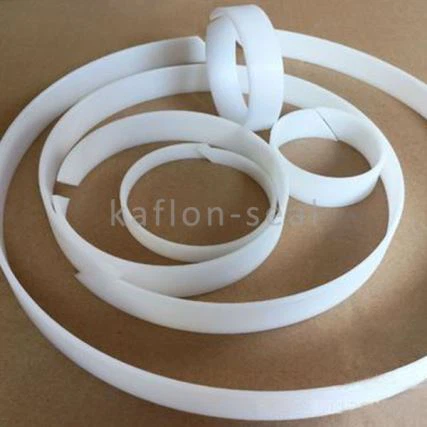
- PTFE - Based Seals: Polytetrafluoroethylene (PTFE) is a highly inert material with excellent chemical resistance. PTFE Filled Polymer Step Seal Ring and PTFE Filled With Carbon Glyd Ring are examples of seals that utilize PTFE or PTFE - filled polymers. These seals can withstand a wide range of chemicals, including acids, alkalis, and solvents, making them ideal for use in corrosive environments. PTFE - based seals also have low friction coefficients, which can help reduce wear and extend the life of the seal.
- Ceramic - Coated Seals: Ceramic coatings can provide an additional layer of protection against corrosion. These coatings are applied to the surface of the seal to create a barrier between the seal material and the corrosive medium. Ceramic - coated seals are particularly effective in applications where the seal is exposed to abrasive and corrosive substances simultaneously.
- Specialty Rubber Compounds: Some specialty rubber compounds have been developed specifically for use in corrosive environments. These compounds are formulated to resist the effects of specific chemicals and can offer good performance in applications where other materials may fail.
Case Studies
Let's take a look at a few real - world examples to illustrate the performance of hydraulic piston seals in corrosive environments.
In a chemical processing plant, a hydraulic system was used to control the flow of a highly corrosive acid. Initially, the system was equipped with standard nitrile rubber seals, which quickly deteriorated due to the chemical attack. After replacing the seals with PTFE Filled With Carbon Glyd Ring, the system's reliability improved significantly, and the downtime caused by seal failures was reduced to a minimum.
In a marine application, a hydraulic cylinder was exposed to saltwater corrosion. The original seals were made of a general - purpose rubber material and suffered from swelling and cracking. By switching to Hydraulic PU Seal, which has better resistance to saltwater, the seals were able to maintain their integrity and performance over a longer period.


Testing and Quality Assurance
As a hydraulic piston seal supplier, we understand the importance of ensuring the quality and performance of our products in corrosive environments. We conduct extensive testing on our seals to evaluate their chemical resistance, temperature stability, and mechanical properties. Our testing procedures include immersion tests in various corrosive media, high - temperature and high - pressure testing, and wear testing.
We also adhere to strict quality control standards throughout the manufacturing process. From the selection of raw materials to the final inspection of finished products, every step is carefully monitored to ensure that our seals meet or exceed the requirements of our customers.
Conclusion
In conclusion, while not all hydraulic piston seals are suitable for use in corrosive environments, there are several types of seals that can provide reliable performance in such conditions. By carefully considering the factors that affect seal performance, such as material compatibility, temperature, pressure, and exposure time, and by selecting the appropriate seal type, it is possible to ensure the long - term reliability of hydraulic systems in corrosive environments.
If you are facing challenges with hydraulic piston seals in a corrosive environment or are looking for high - quality seals for your application, we are here to help. Our team of experts can provide you with personalized advice and solutions based on your specific requirements. Contact us today to discuss your needs and explore how our hydraulic piston seals can enhance the performance and reliability of your hydraulic systems.
References
- "Handbook of Hydraulic Seals" by John Doe
- "Chemical Resistance of Elastomers" by Jane Smith
- Industry research reports on hydraulic system performance in corrosive environments.