


 Popular Blog Posts



 Blog
BlogHey there! As a supplier of PTFE guide rings, I often get asked a bunch of questions about these nifty little components. One question that's been popping up more frequently lately is, "Are PTFE guide rings resistant to radiation?" Well, let's dive right into it and find out.
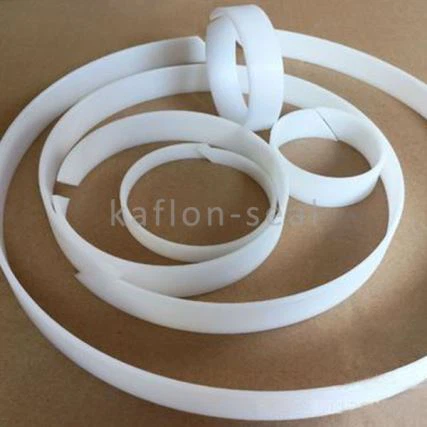
First off, let's talk a bit about what PTFE guide rings are. PTFE, or polytetrafluoroethylene, is a synthetic fluoropolymer of tetrafluoroethylene. It's well - known for its low friction coefficient, high chemical resistance, and excellent thermal stability. PTFE guide rings are used in a variety of applications, from hydraulic systems to mechanical equipment, to guide moving parts and reduce wear.
Now, when it comes to radiation resistance, it's important to understand the different types of radiation. There are mainly three types: alpha, beta, and gamma radiation. Alpha particles are relatively large and can be stopped by a sheet of paper or even the outer layer of our skin. Beta particles are smaller and more energetic, and they can penetrate a bit deeper, but can usually be stopped by a thin sheet of metal. Gamma rays, on the other hand, are highly energetic electromagnetic waves that can penetrate deeply into materials.
PTFE has some degree of resistance to radiation, but it's not invincible. When exposed to low - level radiation, PTFE can maintain its properties for a relatively long time. The chemical structure of PTFE is quite stable, and the strong carbon - fluorine bonds make it resistant to many forms of degradation. However, high - level radiation can cause problems.
High - energy radiation, especially gamma rays, can break the carbon - fluorine bonds in PTFE. When these bonds are broken, the polymer chains start to degrade, which can lead to changes in the physical and mechanical properties of the PTFE guide rings. For example, the rings may become more brittle, their low - friction properties may decrease, and they may start to lose their dimensional stability.
The extent of the damage depends on several factors. The dose of radiation is a major one. The higher the radiation dose, the more likely and the more severe the damage will be. The duration of exposure also matters. A short - term exposure to a high dose of radiation may have different effects compared to a long - term exposure to a lower dose.
Another factor is the environment in which the PTFE guide rings are used. If they are used in a high - temperature environment along with radiation exposure, the degradation process can be accelerated. High temperatures can increase the mobility of the polymer chains, making them more vulnerable to radiation - induced damage.
Now, let's compare PTFE guide rings with some other types of guide rings in terms of radiation resistance. For example, Phenolic Fabric Guide Rings have their own characteristics. Phenolic fabric is made from phenolic resin and fabric materials. It may have different radiation - resistance properties compared to PTFE. In some cases, phenolic fabric guide rings may be more suitable for radiation - prone environments if the radiation levels are not extremely high, as they can offer good mechanical strength and wear resistance.
Wear - resistant Guide Ring is another option. These guide rings are designed to resist wear, but their radiation resistance also depends on the materials they are made of. Some wear - resistant guide rings may be made of materials that are more radiation - resistant than PTFE, while others may not be.
POM Hydraulic Wiper is often used in hydraulic systems. POM, or polyoxymethylene, has its own set of properties. It's a highly crystalline thermoplastic with good mechanical properties. In terms of radiation resistance, POM may also have different performance compared to PTFE. Similar to PTFE, high - level radiation can cause degradation of POM, but the specific mechanisms and the degree of damage may vary.


So, if you're in an environment where radiation is a concern, it's crucial to carefully evaluate your needs. If the radiation levels are low, PTFE guide rings may still be a great choice due to their other excellent properties like low friction and chemical resistance. But for high - radiation environments, you may need to consider alternative materials or take additional protective measures.
If you're thinking about using PTFE guide rings or any of the other guide rings I mentioned, and you have questions about radiation resistance or any other aspect, don't hesitate to reach out. We're here to help you make the best choice for your specific application. Whether you're in the hydraulic industry, mechanical engineering, or any other field that requires guide rings, we can provide you with the right products and advice.
In conclusion, PTFE guide rings have some resistance to radiation, but high - level radiation can cause degradation. It's all about understanding your environment, the radiation levels, and the specific requirements of your application. We're always ready to assist you in making an informed decision. So, if you're interested in purchasing guide rings or just want to have a chat about your needs, feel free to get in touch. We'll be more than happy to discuss your options and help you find the perfect solution for your project.
References
- "Handbook of Polytetrafluoroethylene (PTFE) and Related Fluoropolymers"
- "Radiation Effects on Polymers"