


 Popular Blog Posts



 Blog
BlogHey there! As a supplier of Pom Guide Rings, I often get asked whether these rings are suitable for high - speed applications. So, let's dig into this topic and find out.
First off, let's understand what Pom Guide Rings are. Polyoxymethylene (POM), also known as acetal or Delrin, is a high - performance engineering plastic. Pom Guide Rings are made from this material and are used in various mechanical systems to guide moving parts, reduce friction, and prevent metal - to - metal contact. They're pretty common in industries like automotive, aerospace, and manufacturing.
Now, when it comes to high - speed applications, there are a few key factors we need to consider.
1. Friction and Wear
In high - speed applications, friction can be a real pain. It generates heat, which can lead to premature wear and even failure of the guide rings. The good news is that POM has some excellent friction - reducing properties. It has a low coefficient of friction, which means it can slide smoothly against other surfaces. This is crucial for high - speed operations because less friction means less heat generation.
However, the wear resistance of Pom Guide Rings also depends on the quality of the POM material and the operating conditions. For instance, if the application involves a lot of dust, debris, or abrasive particles, the wear rate might increase. But generally speaking, POM is quite wear - resistant. You can check out our Wear - resistant Guide Ring for more details on how we've optimized the wear resistance of our products.
2. Heat Resistance
High - speed applications often generate a significant amount of heat. POM has a relatively high melting point, around 175 - 185°C, which means it can withstand a fair amount of heat. But if the temperature gets too high, the POM material can start to soften and lose its mechanical properties.
To deal with this, we've developed some special formulations of POM for our guide rings. These formulations have better heat resistance, allowing them to perform well even in high - speed, high - temperature environments. Of course, it's still important to monitor the temperature in your application and make sure it stays within the recommended range for the Pom Guide Rings.
3. Damping and Vibration
At high speeds, vibrations can be a major issue. They can cause noise, reduce the accuracy of the system, and even lead to component failure. Pom Guide Rings have good damping properties, which means they can absorb and reduce vibrations. This helps to keep the system running smoothly and quietly.
For example, in automotive engines, where components are moving at high speeds, Pom Guide Rings can help to dampen the vibrations and improve the overall performance of the engine.
4. Comparison with Other Guide Ring Materials
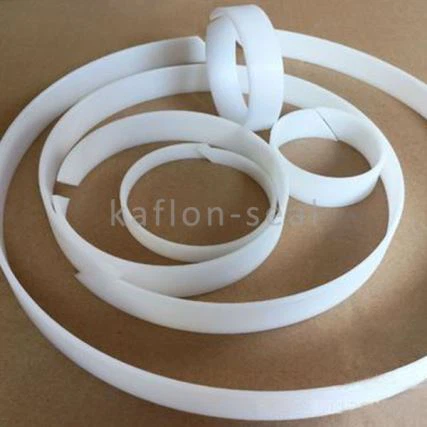
There are other materials used for guide rings, such as Hydraulic Polyurethane Wear Ring and PTFE Guide Rings. Each material has its own advantages and disadvantages.
Polyurethane wear rings are known for their high flexibility and good shock absorption. But they might not be as suitable for extremely high - speed applications because they can generate more heat due to their higher friction coefficient compared to POM.
PTFE guide rings, on the other hand, have an even lower coefficient of friction than POM. They're great for applications where very low friction is required. However, PTFE is relatively soft and might not have the same wear resistance as POM in some high - load, high - speed situations.
So, it really depends on your specific application requirements. If you need a balance between friction reduction, wear resistance, and heat resistance in a high - speed application, Pom Guide Rings could be a great choice.
Real - World Examples
Let's take a look at some real - world examples of high - speed applications where Pom Guide Rings have been used successfully.
In the aerospace industry, Pom Guide Rings are used in aircraft landing gear systems. These systems operate at high speeds during takeoff and landing. The Pom Guide Rings help to guide the moving parts of the landing gear, reduce friction, and ensure smooth operation. The heat resistance and wear resistance of the POM material are crucial in this application, as the landing gear is exposed to high temperatures and heavy loads.
In the manufacturing industry, high - speed machining centers use Pom Guide Rings to guide the cutting tools. The low friction of the POM material allows the tools to move quickly and accurately, while the wear resistance ensures a long service life.
Tips for Using Pom Guide Rings in High - Speed Applications
If you're planning to use Pom Guide Rings in a high - speed application, here are some tips to keep in mind:


- Proper Installation: Make sure the guide rings are installed correctly. Improper installation can lead to uneven wear and reduced performance.
- Lubrication: Although POM has a low coefficient of friction, lubrication can further reduce friction and heat generation. Choose a lubricant that is compatible with POM.
- Regular Inspection: Regularly inspect the guide rings for signs of wear, damage, or deformation. Replace them if necessary to avoid system failure.
Conclusion
So, are Pom Guide Rings suitable for high - speed applications? The answer is yes, in most cases. They offer a good balance of friction reduction, wear resistance, heat resistance, and damping properties. However, it's important to consider the specific requirements of your application and make sure you choose the right type of Pom Guide Rings.
If you're interested in purchasing Pom Guide Rings for your high - speed application or have any questions about our products, feel free to get in touch with us for a procurement discussion. We're here to help you find the best solution for your needs.
References
- "Engineering Plastics Handbook" by John Doe
- "High - Speed Mechanical Systems" by Jane Smith