


 Popular Blog Posts


 Blog
BlogHey there! As a supplier of Pom Guide Rings, I often get asked this burning question: Are Pom Guide Rings recyclable? Let's dive right into it and find out.
First off, let's talk a bit about what Pom Guide Rings are. These little guys are crucial in many industrial applications. They help guide moving parts, reduce friction, and ensure smooth operation. They're used in all sorts of machinery, from hydraulic systems to automotive engines. You name it, they're probably in there doing their job.
Now, when it comes to recyclability, it's not a one - size - fits - all answer. It depends on the materials used to make the Pom Guide Rings. Most Pom Guide Rings are made from a variety of polymers and composites. Some common materials include phenolic fabric and PTFE.
Let's start with phenolic fabric. Phenolic fabric is a composite material that combines phenolic resin with fabric. Phenolic Fabric Guide Rings made from this material have some great properties. They're strong, durable, and can withstand high temperatures and pressures. But when it comes to recycling, things get a bit tricky.
Phenolic resin is a thermosetting plastic. Unlike thermoplastics, which can be melted down and remolded multiple times, thermosetting plastics form irreversible chemical bonds during the curing process. Once they're set, they can't be melted and reformed. This means that traditional recycling methods don't work well for phenolic resin. However, there are some advanced recycling techniques emerging. For example, some companies are exploring chemical recycling, where the phenolic resin is broken down into its basic components using chemicals. But these methods are still in the experimental stage and not widely available.
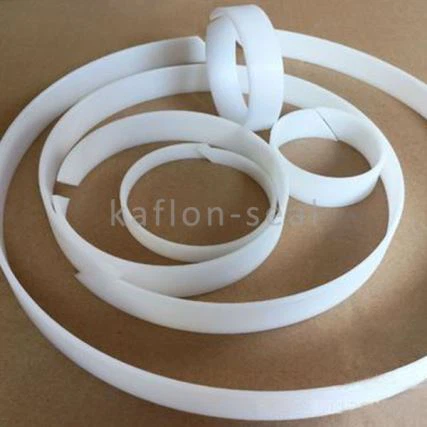
On the other hand, PTFE Guide Rings are made from polytetrafluoroethylene. PTFE is a well - known material for its non - stick properties, low friction coefficient, and high chemical resistance. The good news is that PTFE is recyclable, at least to some extent. There are specialized recycling facilities that can handle PTFE. They use processes like pyrolysis, where the PTFE is heated in the absence of oxygen to break it down into simpler compounds. These compounds can then be used to make new PTFE products or other materials.
Another aspect to consider is the environmental impact of the manufacturing process. Making Pom Guide Rings, especially those from phenolic fabric, can have a significant environmental footprint. The production of phenolic resin involves the use of chemicals and energy - intensive processes. This is why recycling, even if it's difficult, is so important. By recycling, we can reduce the demand for new raw materials and decrease the amount of waste going to landfills.
But it's not just about the materials themselves. The design of the Pom Guide Rings also plays a role in their recyclability. If the rings are designed with recycling in mind, it can make the process much easier. For example, using fewer different types of materials in a single ring can simplify the separation process during recycling.
Now, let's talk about the economic side of things. Recycling Pom Guide Rings can be costly. The specialized equipment and processes required for recycling, especially for materials like phenolic fabric, are expensive. This cost is often passed on to the recycler or the end - user. However, as the demand for sustainable products grows, the cost of recycling is likely to come down. More companies are investing in research and development to find more cost - effective recycling methods.
In some cases, it might be more practical to reuse Pom Guide Rings rather than recycle them. If a ring is still in good condition after use, it can be refurbished and used again. This not only saves on the cost of recycling but also reduces the need for new production. Reusing also has a lower environmental impact compared to manufacturing new rings from scratch.
When it comes to our company, we're committed to promoting sustainable practices. We're constantly looking for ways to make our Pom Guide Rings more recyclable. We're working with research institutions to explore new materials and manufacturing processes that are more environmentally friendly. We're also educating our customers about the importance of recycling and providing them with information on how to properly dispose of our products.
If you're in the market for Pom Guide Rings, it's important to consider the recyclability of the products you're buying. By choosing products that are easier to recycle or reuse, you can do your part for the environment. And if you have any questions about the recyclability of our Pom Guide Rings, don't hesitate to reach out to us. We're here to help you make an informed decision.
We also offer a range of other related products, like Phenolic Cloth Hydraulic Wiper. These wipers are also made from high - quality materials and are designed to work in tandem with our Pom Guide Rings. They play an important role in keeping hydraulic systems clean and functioning properly.
In conclusion, while the recyclability of Pom Guide Rings is a complex issue, there are definitely steps we can take to make it more achievable. Whether it's through advanced recycling techniques, better product design, or increased reuse, we can all contribute to a more sustainable future.


If you're interested in purchasing Pom Guide Rings or have any questions about our products, feel free to contact us. We're always happy to have a chat and discuss your specific needs. Let's work together to find the best solutions for your industrial applications.
References
- "Plastics Recycling Handbook" by John Murphy
- "Environmental Impact of Polymer Manufacturing" by Emily Green
- Industry reports on recycling technologies for thermosetting plastics and PTFE