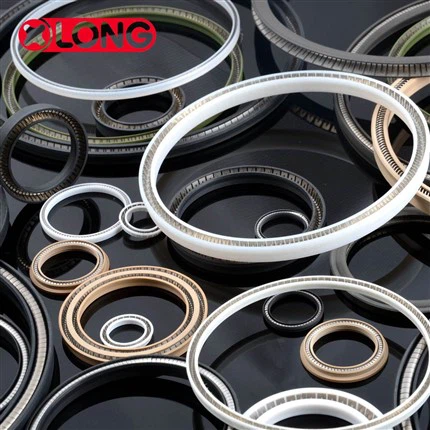


Components
Sealing Element:
It is usually made of a flexible material such as elastomers (like rubber), PTFE (polytetrafluoroethylene), or other polymers. The choice of material depends on the application requirements, such as temperature range, chemical compatibility, and pressure resistance. For example, in a high - temperature environment, a PTFE - based sealing element might be preferred because it can withstand temperatures up to 260°C, while some elastomers may degrade at much lower temperatures.
Metal Spring:
The metal spring is designed to apply a consistent radial or axial force. The spring can be made of various metals like stainless steel. Stainless steel springs are popular because they offer good corrosion resistance and mechanical strength. The spring's force is crucial as it compensates for any wear, thermal expansion or contraction, and surface irregularities of the mating parts.
Working Principle
When the seal is installed between two mating surfaces (such as in a pump shaft or a valve stem), the spring exerts a force on the sealing element. This force presses the sealing element against the surfaces, creating a tight seal. As the system operates, if there are any changes in the dimensions of the mating surfaces due to factors like temperature changes or mechanical vibrations, the spring - energized seal can adapt. For instance, if the shaft expands due to heat, the spring - energized seal will still maintain contact and prevent leakage because the spring can adjust its force to accommodate the expansion.
Advantages
Good Sealability:
They can provide an effective seal even under low - pressure conditions and can handle a wide range of pressures. The spring - energized design allows the seal to conform to the mating surfaces more precisely than some traditional seals, reducing the likelihood of leakage.
Versatility:
These seals can be used in a variety of applications, including in rotary and reciprocating equipment. They are suitable for applications involving different fluids such as oils, water, and various chemicals. For example, in the chemical processing industry, they can be used to seal pumps and valves that handle corrosive chemicals.
Long Service Life:
The ability of the spring to compensate for wear and dimensional changes helps to extend the life of the seal. Compared to some non - spring - energized seals, they are less likely to fail due to factors like surface wear or misalignment.
Applications
Industrial Equipment:
They are widely used in pumps, compressors, and mixers. In a centrifugal pump, for example, the metal spring - energized seal is used to prevent the pumped fluid from leaking along the pump shaft.
Automotive Industry:
They can be found in applications such as power steering systems and automatic transmissions. In a power steering system, the seal helps to keep the power - steering fluid in the system and prevent leaks that could lead to a loss of power - steering function.
Aerospace Applications:
Given their reliability and ability to handle a range of operating conditions, they are used in aircraft hydraulic systems and fuel systems. The seals need to perform under extreme conditions such as high altitude, temperature variations, and vibration, and the metal spring - energized seal can meet these requirements.
Hot Tags: metal spring energized seal, manufacturers, suppliers, factory, customized, seal design, sealing components, dynamic seal, sealing solution, quality seal, industrial sealing products